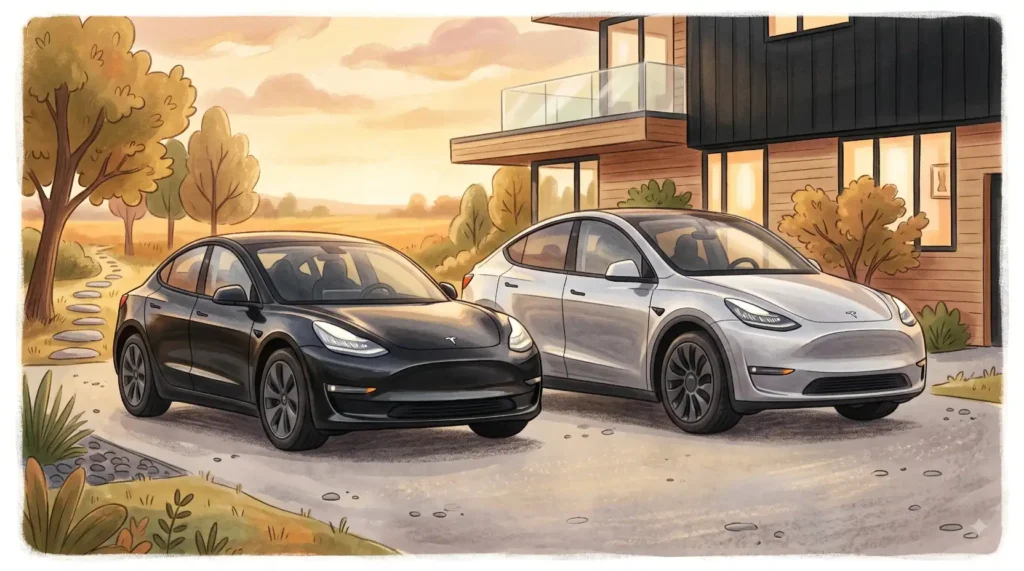
Let me set the scene. 🌆
It’s 9:15 p.m. on a Friday. You’ve already done six rides and four food drops. Your phone’s buzzing with another ping, your back’s a little stiff, and the only number that really matters tonight is the one at the bottom of your earnings screen — minus whatever you just burned on fuel.
For a gig driver, the car isn’t transport. It’s the business. Every mile is either making you money or costing you money, and the gap between those two outcomes is mostly decided by what you’re driving. 🚗
That’s why so many Uber, Lyft, Ola, and delivery drivers are quietly switching to electric. When you drive 200, 300, even 400 miles a day, the math stops being about badges and screens and starts being about cents per mile, charging time, and whether the seat will survive 60,000 miles a year.
So this is your no-fluff guide to finding the best EV for Uber delivery and rideshare work in 2026 — picked for people who actually grind out the miles, in both the US and India. 👇
- ⚡ The Short Answer
- 🏆 6 Rideshare & Delivery EV Picks at a Glance
- 🧭 What Gig Drivers Actually Need
- 💰 The Economics: Why EVs Crush Petrol for High-Mileage Gig Work
- 🚗 Best EV Picks for Rideshare Drivers
- 📦 Best EV Picks for Delivery Drivers
- ⚡ Fast-Charging During Your Shift
- 🛠️ Durability & Maintenance for High Miles
- 🇮🇳 The India Gig Context: Ola, Uber & Delivery
- 🏦 Financing & Leasing for Gig Drivers
- 📈 2026: Gig Fleets Going Electric
- ✅ 5 Tips for Gig EV Drivers
- 🛒 Shop This Post
- 🎯 Quick Quiz: What's Your Gig EV Type?
- 📋 The Gig EV Checklist
- 🤔 People Also Ask
- 🚀 The Bottom Line
⚡ The Short Answer
Short on time? Here’s the gist before we get into the weeds. The best EV for Uber delivery and rideshare duty in 2026 usually nails these traits:
- 💸 Rock-bottom running cost per mile — often a third or less of a petrol equivalent.
- 🔋 Real-world range of 250+ miles (400+ km) so a full shift rarely means a long charging break.
- ⚡ Fast-charging that adds a big chunk of range in 20–30 minutes — your lunch becomes your fill-up.
- 🢑 A tough, easy-to-clean interior that shrugs off thousands of passengers and spilled coffees.
- 🛋️ Comfort for 8–12 hour shifts — your body is in this seat more than your bed.
In the US, efficient sedans and crossovers like the Tesla Model 3/Y, Hyundai Ioniq 6, and Chevy-style value EVs lead for rideshare, while smaller hatchbacks suit delivery. In India, it’s Tata, MG, and BYD cars for cabs, plus cheap e-autos and e-scooters for last-mile delivery. (All prices and specs here are illustrative bands, not promises. 😉)
🏆 6 Rideshare & Delivery EV Picks at a Glance
Before we dig into why, here’s a quick scan of the EV archetypes that keep earning their keep in gig work. Think types of vehicle, not exact trims — numbers shift by model year, battery, and how hard you drive. 👇
| EV Archetype | Real-World Range | Running Cost / Mile | Durability | Gig Standout |
|---|---|---|---|---|
| 🇺🇸 Efficient mid sedan (e.g. Model 3) | ~290–330 mi / 470–530 km | ~$0.04–0.06 | High — proven high-mileage | Cost + charging network |
| 🇺🇸 Roomy crossover (e.g. Model Y) | ~280–320 mi / 450–515 km | ~$0.05–0.07 | High — big cabin wears slow | Space for riders + bags |
| 🇺🇸 Value hatchback (delivery) | ~200–260 mi / 320–420 km | ~$0.03–0.05 | Medium — cheap to fix | Low buy-in for food drops |
| 🇮🇳 Value EV sedan/SUV (e.g. Tata/MG) | ~180–260 mi / 290–420 km | ~₹1.0–1.5 | Good — cheap parts | Cab economics that work |
| 🇮🇳 Electric auto-rickshaw | ~60–90 mi / 100–145 km | ~₹0.4–0.7 | High — simple, rugged | Last-mile gig workhorse |
| 🇮🇳 Electric scooter (delivery) | ~50–80 mi / 80–130 km | ~₹0.2–0.4 | Medium — easy to service | Cheapest cost per drop |
Notice the pattern? The winners aren’t the flashiest cars — they’re the ones that turn each kilowatt-hour into the cheapest, most reliable mile. That’s the gig superpower. 🔋
🧭 What Gig Drivers Actually Need
Here’s where regular buying advice falls apart. A normal owner drives 12,000 miles a year. You might do that in two months. Your priorities are completely different, so weigh these in order. 👇
1. Cost per mile, above all else. This is your profit margin. Fuel and maintenance are the two biggest controllable costs in gig work, and an EV crushes both. Get this right and everything else is gravy.
2. Real-world range. You don’t need 400 miles, but you do need enough to run a long shift without a panic stop. A car that covers most of your day on one charge keeps you earning instead of waiting.
3. Fast-charging speed. When you do charge, every minute plugged in is a minute not earning. The car that adds 150 miles over a lunch break beats the one that crawls. ⚡
4. A durable, washable interior. Strangers, spills, sand, food, kids, rain — your cabin takes a beating most owners never imagine. Tough seats and hard-wearing floors matter enormously.
5. All-day comfort. You’re not commuting; you’re living in this seat. A supportive seat, quiet cabin, and good climate control are the difference between finishing strong and quitting early. 🢑
Get these five right and you’ve found your gig machine. Get them wrong and even a “cheap” car can quietly bleed your earnings dry.
💰 The Economics: Why EVs Crush Petrol for High-Mileage Gig Work
Let’s talk about the part that actually pays your rent. 💵
A petrol car doing heavy gig miles is a money furnace. Fuel, oil changes, brake jobs, clutches, exhausts — they all scale with mileage, and gig drivers rack up mileage like nobody else. This is exactly where an EV’s advantage explodes.
Picture a driver covering 250 miles (400 km) a day, six days a week — roughly 75,000 miles (120,000 km) a year. On petrol in the US, fuel alone might run $9,000–12,000 a year. The same miles in an efficient EV, charged smartly, might cost $2,500–4,000. That’s thousands of dollars straight back into your pocket. 💸
In India the gap is just as dramatic. A petrol cab running similar daily distances might spend ₹3–5 per km on fuel, while an EV charged at home can run nearer ₹1–1.5 per km. Over a year of full-time driving, that difference can run into lakhs. We break the full comparison down in our guide on EV vs petrol running cost in India — required reading if you’re weighing a cab switch.
And fuel is only half the story. EVs have no oil, no spark plugs, no timing belts, far less to break. Regenerative braking even makes your brake pads last longer. For a high-mileage gig driver, those skipped service bills add up to serious money over a year. 🛠️
The bottom line of the economics is simple: the more you drive, the more an EV pulls ahead. For a full-time gig driver, that makes the best EV for Uber delivery work less of a lifestyle choice and more of a smart business decision.
🚗 Best EV Picks for Rideshare Drivers
Rideshare is its own beast. You need space for passengers and luggage, a cabin that looks presentable, and range to cover long airport-and-back days without parking up to charge. Let’s walk the archetypes. 🛩️
The efficient mid-size sedan. This is the rideshare workhorse — think Tesla Model 3 or Hyundai Ioniq 6. Strong real-world range in the high 200s of miles (around 470 km), excellent efficiency, comfortable for four adults, and access to a solid charging network. For full-time rideshare, the low running cost is hard to beat.
The roomy crossover. When you carry families, airport luggage, or just want more headroom for taller passengers, something like a Tesla Model Y or a mid-size electric SUV shines. You trade a little efficiency for space that keeps your ratings high. 🧳
The value sedan. Not every rideshare driver needs a premium badge. A well-priced electric sedan with 250+ miles (400+ km) of range and a comfortable back seat can be the smartest money move — lower payments, similar earnings, better margins.
For drivers who also do long airport runs, range cushion matters even more — our companion guide on the best EVs for long commutes (range champions) digs into which models hold up best at high speed over big daily distances. Worth a look before you buy.
📦 Best EV Picks for Delivery Drivers
Delivery is a different game from rideshare. Nobody’s sitting in your back seat, so comfort-for-passengers matters less — but cheap buy-in, low running cost, and easy parking matter more. 🍕
The value hatchback or compact. For food and parcel delivery, a small, efficient EV is ideal. Lower purchase price, tiny running cost per mile, nimble in city traffic, and easy to slot into tight pickup spots. You’re stopping and starting constantly, which is exactly where EVs are most efficient.
The compact crossover. If you do bulkier grocery or parcel runs, a small electric crossover gives you cargo room without ballooning your costs. Fold the seats and you’ve got a surprisingly capable little van.
The two-wheeler option. In dense cities — and across much of India — an electric scooter or motorcycle is the cheapest delivery tool on the planet. Pennies per mile, free parking, and weaving through gridlock that would trap a car. 🛵
The delivery rule of thumb: buy the smallest, cheapest EV that comfortably carries your typical load. Every dollar or rupee you don’t spend on the vehicle is margin you keep. That’s what makes a humble hatchback or scooter genuinely one of the best EV for Uber delivery choices out there.
⚡ Fast-Charging During Your Shift
Here’s the thing that separates a smooth gig day from a frustrating one: how you handle charging while you work. 🔌
A regular owner charges overnight and forgets about it. A gig driver often needs a mid-shift top-up — and the smart ones turn that into a non-event. A few principles:
- 📈 The charging curve isn’t flat. EVs charge fastest from low to about 50–60% and slow above 80%. For mid-shift top-ups, charging 20–60% in 15 minutes is often smarter than waiting for a full battery.
- ☕ Stack charging with your breaks. Plug in while you eat lunch, use the restroom, or wait out a slow patch. Done right, you barely lose earning time.
- 🗺️ Know your reliable fast chargers. Map the dependable DC chargers near your busiest zones before you need them. Driving 20 minutes to a broken charger kills a shift.
- 🌡️ Precondition the battery before a fast charge in cold weather so it accepts power quickly.
For US drivers, leading sedans and crossovers can add 150–200 miles (240–320 km) in around 20–30 minutes — basically one meal break. In India, DC fast charging is improving fast in metros but still patchy elsewhere, so most gig drivers lean on home or hub charging overnight and use fast chargers as a backup. Either way, charging strategy matters as much as charging speed. ⚡
🛠️ Durability & Maintenance for High Miles
Here’s a worry I hear from every gig driver thinking about going electric: “Won’t all those miles wreck the battery?” 🔋
Honestly? Less than you’d fear. Modern EV batteries are built for hundreds of thousands of miles, and high-mileage gig fleets are proving it daily — many rack up 200,000+ miles with their batteries still holding strong capacity. The trick is treating the battery kindly:
- 🔋 Charge to ~80% for daily driving, topping to 100% only when you need the full range. Easier on the cells.
- 🌡️ Avoid leaving it at 100% or near-empty for long stretches, and don’t only ever fast-charge if you can mix in slower charging too.
- 🧊 Park in shade or a garage where you can — heat is the battery’s real enemy, which matters a lot in Indian summers.
On the mechanical side, EVs are a gig driver’s dream. No oil changes, no exhaust, no clutch, no timing belt — far fewer things that fail on a 60,000-mile year. Regenerative braking means brake pads can last two or three times longer than on a petrol cab. 🛑
The flip side: tires wear faster, because EVs are heavier and have instant torque. Budget for tires and rotate them regularly. And keep that interior protected — which is exactly where good seat covers and floor mats earn their keep over a hard-driven year. (More on that in Shop This Post.) 🢑
🇮🇳 The India Gig Context: Ola, Uber & Delivery
India’s gig economy runs on two and three wheels as much as on four, and that shapes the whole electric story. 🇮🇳
Ride-hailing cabs. For Ola and Uber drivers, value EVs from Tata, MG, and BYD have become genuinely viable. With home or hub charging, a per-kilometre cost near ₹1–1.5 versus ₹3–5 on petrol can transform a driver’s monthly take-home. Many fleet operators are now actively pushing electric cabs for exactly this reason.
Auto-rickshaws. The humble e-auto is one of the great gig success stories. Cheap to buy, cheap to run, rugged, and perfect for short city hops and last-mile delivery. For a driver previously bleeding cash on CNG or petrol, an electric auto can pay for itself faster than almost anything else. 🛵
Delivery scooters and bikes. Food and parcel delivery in India is dominated by two-wheelers, and electric scooters are taking over fast. With running costs of just paise per kilometre, free or cheap parking, and easy battery-swap options in some cities, they’re often the cheapest cost-per-drop tool available. 🛵
The honest India takeaway? If your gig is a city cab, a value EV pays off quickly. If it’s last-mile delivery, an e-auto or e-scooter is frequently the single best money move you can make — low buy-in, tiny running cost, and the kind of reliability that keeps you earning every day.
🏦 Financing & Leasing for Gig Drivers
Buying outright isn’t the only path — and for a lot of gig drivers, it isn’t the smartest one either. 💳
Because gig work means heavy, predictable mileage, your monthly cost math is what matters. The question isn’t just “what does this car cost?” — it’s “do my fuel-and-maintenance savings cover the payment, with profit left over?” For a high-mileage EV, the answer is often yes.
A few routes worth weighing:
- 📄 Leasing can suit drivers who want a fresh car every few years and predictable costs — but watch mileage caps, which gig driving blows through fast. Look for high-mileage or commercial lease terms.
- 🏢 Fleet and rideshare partner programs. Many platforms and rental partners now offer EVs to gig drivers on weekly or rent-to-own terms, bundling insurance and sometimes charging.
- 🇮🇳 EV-specific loans and subsidies. In India, several lenders and state schemes offer favorable terms on electric cabs, e-autos, and delivery scooters. These can dramatically lower your upfront barrier.
The smart move is to run the numbers on total monthly cost — payment plus charging plus insurance plus maintenance — and compare it against what you spend now on a petrol vehicle. For many full-time drivers, the best EV for Uber delivery work ends up cheaper per month than the petrol car they’re already running. 📊
📈 2026: Gig Fleets Going Electric
Here’s the encouraging backdrop — the whole industry is moving your way. 🚀
A few trends shaping 2026:
- 🏢 Platform commitments. Uber, Lyft, Ola, and major delivery players have all set aggressive electrification targets, and many now offer incentives, bonuses, or discounted EV access to drivers who go electric.
- 🔌 Charging hubs for gig drivers are popping up in cities — dedicated fast-charging stations aimed squarely at high-mileage rideshare and delivery fleets.
- 💰 Falling EV prices and better batteries keep improving the gig math, with more affordable models and longer real-world range every year.
- 🇮🇳 India’s two- and three-wheeler electric boom is accelerating, with battery-swapping networks making delivery work especially frictionless.
The takeaway? Going electric as a gig driver in 2026 isn’t early-adopter territory anymore — it’s quickly becoming the obvious, mainstream choice. The drivers switching now are simply getting a head start on the savings. 😎
✅ 5 Tips for Gig EV Drivers
Quick, practical advice to maximize your earnings. 👇
- 💸 Optimize for cost per mile, not sticker price. A slightly pricier but ultra-efficient EV can out-earn a cheap one once you’re doing serious miles. Run the per-mile math.
- ⚡ Build a charging routine around your breaks. Stack mid-shift top-ups with meals and rest stops so charging time never eats into earning time.
- 🛡️ Protect your interior from day one. Heavy-duty seat covers and all-weather floor mats keep resale value high and cleaning quick over a hard-driven year.
- 🔋 Charge to ~80% daily and avoid extreme heat to keep your battery healthy through years of high-mileage gig work.
- 📊 Track everything. A cheap OBD2 scanner and a notes app let you watch battery health, efficiency, and real running cost so you always know your true margin.
🛒 Shop This Post
Three things that make gig EV life genuinely easier — and more profitable. 🛍️
- 🔌 A Level 2 home EV charger (wallbox). The single highest-impact purchase for a gig driver — wake up to a full battery every shift at the cheapest possible cost per mile, no public charging needed. Look for a 7–11 kW unit with scheduling.
- 🢑 Heavy-duty seat covers & all-weather floor mats. Your interior takes a beating from thousands of passengers and deliveries. Durable, washable covers and rubber mats protect your seats, keep cleanup fast, and protect resale value.
- 📟 An OBD2 scanner. A simple plug-in scanner lets you monitor battery health, efficiency, and any warning codes yourself — so you catch issues early and always know your real cost per mile.
💬 Disclosure: Some links in this post are affiliate links. If you buy through them, we may earn a small commission at no extra cost to you. We only recommend gear we’d genuinely use ourselves. Thanks for supporting the site! 🙏
🎯 Quick Quiz: What’s Your Gig EV Type?
Answer honestly. 👇
1. What’s your main gig?
– A) Rideshare (Uber/Lyft/Ola) → Efficient sedan or roomy crossover.
– B) Food/parcel delivery in a car → Value hatchback or compact crossover.
– C) Last-mile delivery in a dense city → Electric scooter or e-auto.
2. How many miles/km do you drive a day?
– A) Under 150 mi / 240 km → Most efficient EVs cover it on one charge.
– B) 150–250 mi / 240–400 km → Prioritize range and fast-charging.
– C) Over 250 mi / 400 km → You need 280+ mi range plus a solid mid-shift charging routine.
3. What’s your biggest cost pain right now?
– A) Fuel → An EV will slash it dramatically.
– B) Maintenance → EVs skip oil, clutches, and most service bills.
– C) Vehicle payment → Look at the smallest EV that fits your load, or a gig lease.
Add it up and you’ll know exactly which archetype from our table fits you. 🎯
📋 The Gig EV Checklist
Print this. Use it before you commit. ✂️
- [ ] Running cost per mile/km is clearly lower than my current petrol vehicle
- [ ] Real-world range covers most of a typical shift with margin
- [ ] 10–80% fast-charge time is under ~30 minutes
- [ ] There are reliable fast chargers near my busiest zones
- [ ] Interior is durable and easy to clean (or I’ve budgeted seat covers + mats)
- [ ] Seat and cabin are comfortable on a long test drive
- [ ] I can charge at home or a hub overnight at off-peak rates
- [ ] My monthly cost (payment + charging + insurance + maintenance) beats petrol
- [ ] I’ve checked any gig-driver incentives, leases, or subsidies
- [ ] Price band fits my budget in $ / ₹
Tick most of these and you’ve found your gig machine. ✅
🤔 People Also Ask
Q: What is the best EV for Uber delivery and rideshare in 2026?
There’s no single winner, but the best EV for Uber delivery and rideshare work generally combines very low cost per mile, 250+ miles (400+ km) of real-world range, and fast 10–80% charging. In the US, efficient sedans and crossovers like the Tesla Model 3/Y and Hyundai Ioniq 6 lead, with small hatchbacks great for delivery. In India, value EVs from Tata, MG, and BYD suit cabs, while e-autos and e-scooters dominate last-mile delivery. (Figures are illustrative.)
Q: How much can a gig driver save by switching to an EV?
A lot — and the more you drive, the more you save. A heavy-mileage driver might cut fuel costs by 60–70% and skip most routine maintenance. Over a full year of gig driving, that can mean thousands of dollars in the US or lakhs of rupees in India, often more than enough to cover the car payment.
Q: Will heavy gig mileage destroy my EV battery?
Not as fast as you’d think. Modern EV batteries are built for hundreds of thousands of miles, and many high-mileage gig vehicles keep strong capacity past 200,000 miles. Charging to ~80% daily, avoiding extreme heat, and mixing in slower charging all help your battery last through years of hard use.
Q: Which is the cheapest EV for delivery work?
For car-based delivery, a small, efficient electric hatchback usually offers the lowest total cost. In dense cities and across India, an electric scooter or e-auto is even cheaper — pennies or paise per mile, free or cheap parking, and minimal maintenance make them the lowest cost-per-drop option available.
Q: Do I need a home charger to drive an EV for gig work?
You don’t strictly need one, but it’s the single best upgrade for a gig driver. A Level 2 wallbox means you start each shift with a full battery at the cheapest possible rate, and rely on fast chargers only for mid-shift top-ups. It turns charging into a background routine rather than a daily chore.
Q: Can I lease or finance an EV specifically for rideshare and delivery?
Yes. Many platforms and rental partners now offer EVs to gig drivers on weekly, monthly, or rent-to-own terms, sometimes bundling insurance and charging. In India, EV-specific loans and state subsidies can lower upfront costs on cabs, e-autos, and scooters. Always compare your total monthly cost against your current petrol vehicle.
🚀 The Bottom Line
For a gig driver, going electric isn’t a lifestyle statement — it’s a business decision, and a pretty compelling one. Lower cost per mile, far fewer service bills, a quieter cabin for those long shifts, and a “full tank” waiting in your driveway every morning. 🌅
The trick is buying for your gig, not the brochure. Weigh cost per mile, real-world range, fast-charging, interior durability, and all-day comfort — in that order — and the right vehicle gets obvious fast. Whether that’s an efficient US sedan for rideshare, a humble hatchback for deliveries, or an e-auto or scooter for India’s last-mile grind, the best EV for Uber delivery and rideshare work is the one that turns your hardest-working miles into your most profitable ones.
So grab the checklist, run your per-mile numbers, and book a test drive on a real shift route. Then set up that home charger and watch your fuel costs basically vanish. 😎
➡️ Next steps: Need maximum range for long airport runs? Read our best EVs for long commutes (range champions). Weighing a cab switch in India? Start with EV vs petrol running cost in India. Then come back, pick your gig machine, and start keeping more of what you earn. ⚡