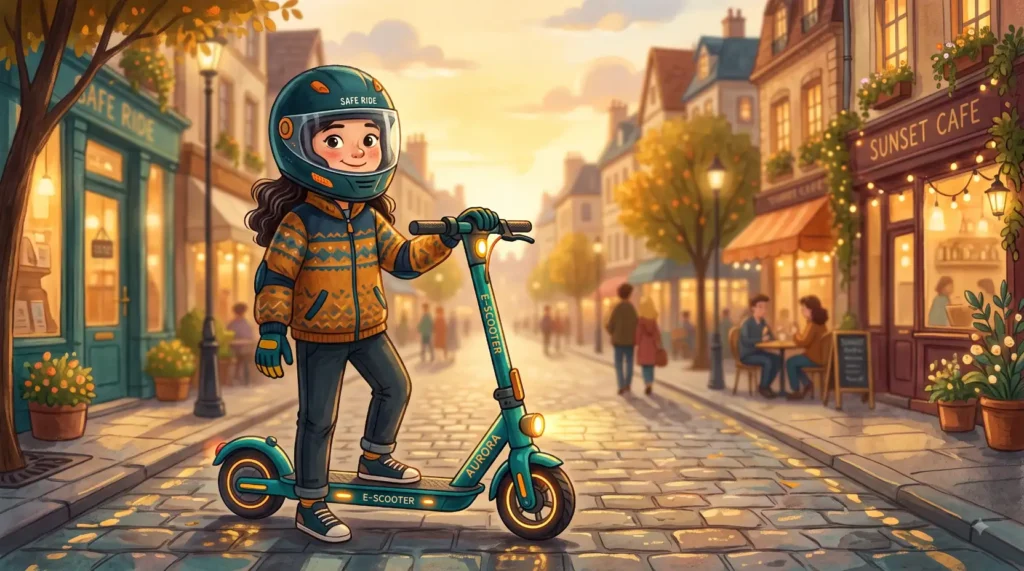
Let me tell you something that most e-scooter ads will never show you. ⚡
That gorgeous machine with the instant torque and the silent glide? It can throw you forward faster than your brain expects. There’s no engine roar to warn the car next to you that you’re moving. There’s just you, the road, and physics.
I’m not here to scare you off riding. I ride too, and I love it. But I’ve also seen what a cheap, ill-fitting helmet does in a low-speed spill — which is to say, not much that’s good. The truth is that your scooter’s safety rating means nothing if your head isn’t protected.
So let’s talk honestly about the best helmet electric scooter riders should actually be wearing in 2026 — plus the gloves, guards, and gear that turn a nasty fall into a forgettable one. 🛵
⚡ The Short Answer
If you’ve got thirty seconds before you ride off, here’s the cheat sheet:
- 🥾 Want maximum protection? A certified full-face helmet beats every other type, full stop.
- 🌆 City commuting in heavy heat? A well-ventilated modular or open-face helmet with a certified shell is a fair trade-off.
- ✅ Certification matters most. Look for ISI (India), DOT, ECE 22.06, or Snell — never an uncertified “fashion” lid.
- 🧤 Don’t stop at the head. Gloves, knee/elbow guards, and a hi-viz vest dramatically cut injury risk.
- 👶 Kids and pillion riders need real gear too — not adult hand-me-downs that flop around.
🛡️ Quick Comparison: Helmet & Safety Gear Types for 2026
Protection levels below are general guidance, not lab promises. Always match certified gear to your real riding speed and conditions.
| Gear Type | Protection Level | Best For | Certification to Look For |
|---|---|---|---|
| Full-Face Helmet | ★★★★★ Highest | Faster rides, highways, all-weather | ISI / DOT / ECE 22.06 / Snell |
| Modular (Flip-Up) Helmet | ★★★★☆ Very High | Commuters who want convenience + safety | ISI / DOT / ECE 22.06 |
| Open-Face (3/4) Helmet | ★★★☆☆ Moderate | Low-speed city riding, hot climates | ISI / DOT / ECE |
| Half Helmet | ★★☆☆☆ Basic | Very low-speed, short hops (least protective) | ISI / DOT (minimum) |
| Riding Gloves | ★★★☆☆ Hands/Palms | Every ride — protects reflexive landing | CE / abrasion-rated |
| Knee & Elbow Guards | ★★★☆☆ Joints | Commuters, learners, faster riders | CE Level 1/2 |
| Hi-Viz Vest / Jacket | ★★★☆☆ Visibility | Night riding, traffic, monsoon, fog | EN ISO 20471 (reflective) |
💥 Why Safety Gear Matters More on an E-Scooter
Here’s the thing people underestimate: e-scooters are deceptively quick. 🚀
Petrol scooters build speed with a familiar rising whine. Electric ones deliver torque the instant you twist the throttle — silent and immediate. That surge is thrilling, but it also means you can find yourself at 40 km/h in a heartbeat, often before your reflexes have caught up.
Now add urban traffic. You’re weaving between cars, buses, and pedestrians who literally cannot hear you coming.
That silence is a hidden hazard. A driver glancing at their mirror hears nothing, sees nothing, and pulls out. This is exactly why visibility gear and a proper helmet aren’t optional extras — they’re the difference between a near-miss and a hospital visit.
And let’s be blunt about road surfaces. 🛣️
Potholes, loose gravel, wet paint, monsoon puddles, sandy patches near construction — e-scooters with their smaller wheels feel these more sharply than big motorcycles do. A front wheel that washes out on gravel puts you down in under a second.
When that happens, your gear is the only thing between your skin and the tarmac. A certified helmet protects your skull and brain. Gloves save the palms you’ll instinctively throw out. Guards shield the knees and elbows that hit first. None of this is paranoia — it’s just respecting what the road can do.
🥾 Helmet Types Explained: Full-Face vs Open-Face vs Half
Not all helmets protect equally, so let’s break down the four main types you’ll see.
Full-face helmets wrap your entire head, including the chin and jaw. That chin bar matters more than people realise — a huge share of impact forces hit the lower face. For protection, nothing else comes close. If safety is your top priority, this is the best helmet electric scooter choice, period. 🥇
Modular (flip-up) helmets give you full-face coverage with a chin bar that lifts up. They’re heavier and slightly less rigid than a true full-face, but they’re brilliant for commuters who want to chat or breathe at a red light without removing the lid.
Open-face (3/4) helmets cover the top, back, and sides of your head but leave your face exposed. They’re cooler and lighter, popular in hot cities and for low-speed riding. The trade-off is real, though: no chin protection at all.
Half helmets cover only the top of your skull. They’re the least protective option and, honestly, I’d only consider one for very short, very slow hops — and even then, reluctantly. 😬
The pattern is simple: more coverage equals more protection. The right pick balances that protection against your speed, climate, and comfort — but never drop below a properly certified shell.
✅ Certifications That Actually Matter
This is the part most buyers skip, and it’s the part that actually saves lives. 🧠
A helmet is only as good as the testing standard behind it. A glossy “stylish” lid with no certification is essentially a hat. Here’s what to look for, market by market.
In India: the ISI mark. By law, motorcycle and scooter helmets sold in India must carry the ISI certification (IS 4151) from the Bureau of Indian Standards. That little ISI stamp means the helmet passed impact and retention testing. No ISI mark? Don’t buy it — it’s illegal and unsafe.
In the US and globally: a few standards dominate.
- DOT (FMVSS 218) is the US federal minimum. Legally required, self-certified by manufacturers.
- ECE 22.06 is the current European standard — rigorous, third-party tested, and respected worldwide.
- Snell is a voluntary, premium standard with even tougher impact testing, common on high-end helmets.
A helmet carrying ECE 22.06 or Snell on top of the legal minimum is a strong sign of serious protection. When in doubt, more certifications generally mean more peace of mind. 🛡️
Whatever you ride, never buy a helmet without at least the legally required mark for your country. This single check filters out the junk instantly.
📏 Fit & Features: Visor, Ventilation, Weight
A certified helmet that fits badly is a certified helmet that fails you. Fit is everything. 🎯
A proper helmet should feel snug but not painful — firm against your cheeks and forehead, with no pressure points. When you shake your head, it shouldn’t slide. If you can rock it forward off your brow, it’s too big. A loose helmet can come off in a crash, which defeats the entire point.
Always fasten the chin strap properly. A helmet you don’t buckle is a helmet that flies away on impact.
Beyond fit, a few features genuinely improve daily riding.
The visor protects against wind, dust, insects, and glare. Look for an anti-scratch, anti-fog visor, ideally with UV protection. A clear visor for night and a tinted one for day is a nice-to-have.
Ventilation keeps you comfortable and alert — sweat and fogging are distractions you don’t want in traffic. Good intake and exhaust vents make a huge difference, especially in hot climates.
Weight affects neck fatigue on longer rides. A lighter certified shell is easier on your neck, but never sacrifice certification for a few grams. Comfort matters, but protection comes first. 💪
🧤 Beyond the Helmet: Gloves, Jacket, Guards & Hi-Viz
Your head is the priority, but it isn’t the only thing that hits the ground. Let’s cover the rest of your body. 🥺
Riding gloves are the most underrated piece of gear. In almost every fall, your hands shoot out instinctively to break the landing — and bare palms shred on tarmac. A good pair of abrasion-resistant gloves with knuckle protection saves you from painful, slow-healing road rash. Wear them every single ride.
A riding jacket with armor at the shoulders, elbows, and back protects your torso and spine. Even a lightweight mesh jacket is far better than a t-shirt against asphalt.
Knee and elbow guards shield the joints that typically take the first impact in a slide. They’re cheap, light, and especially smart for learners and faster commuters. CE Level 1 or 2 guards offer tested protection.
A hi-viz vest or reflective jacket addresses that silent-scooter problem we talked about. ⚠️
Because drivers can’t hear you, they need to see you — and a bright, reflective layer makes you dramatically more visible at dusk, at night, and in monsoon murk. It’s one of the cheapest pieces of safety gear and one of the most effective. If you ride after dark even occasionally, get one.
🌡️ Gear for Hot Weather and Indian Climate
Let’s address the real reason people skip gear in much of India and the warmer US states: it gets hot. 🥵
I won’t pretend a full-face helmet in 40°C traffic is breezy. But “it’s hot” is not a reason to ride bareheaded — it’s a reason to choose smarter gear. Modern equipment is built for exactly this.
Look for helmets with generous ventilation channels and multiple vents that push air across your scalp. Moisture-wicking, removable, washable liners keep things hygienic and cooler. Some riders prefer a certified open-face helmet in peak summer as a comfort compromise — acceptable for low speeds, though you lose chin protection.
For the body, breathable mesh jackets and ventilated gloves exist precisely for hot climates.
They use perforated panels and mesh fabric that let air flow through while still housing protective armor. You stay far cooler than in solid leather, without riding in a flimsy shirt.
The mistake to avoid is the all-or-nothing trap — deciding that because full leather is too hot, you’ll wear nothing. There’s a huge, comfortable middle ground of climate-appropriate certified gear. Your wellbeing is worth that small bit of research. 💚
👶 Kids and Pillion Safety
If someone rides behind you, their safety is your responsibility too — and this is where corners get cut most. 🚨
Pillion passengers need their own certified helmet that fits their head. An adult helmet on a smaller person rattles around uselessly and can come off in a fall. This applies whether it’s your partner, a friend, or your child. In India, helmets are legally required for pillion riders, not just the person driving.
Don’t treat the back seat as the safe seat. The passenger faces the same road, the same traffic, the same potholes.
Children deserve special care here. 🧒
A child’s helmet must be sized for a child — never an adult helmet “they’ll grow into.” It should sit level, fasten snugly, and carry proper certification. Some parents also add high-visibility clothing for kids, which makes sense given how hard small passengers are to spot.
Honestly, if a young child can’t be properly secured and protected, reconsider whether the trip needs two wheels at all. No errand is worth an unprotected head. Safety, every time, for everyone on board.
💰 Budget vs Premium Gear: What’s Worth Paying For
Good news: you do not need to spend a fortune to ride safely. 🪩
A certified entry-level helmet protects your head to the legal standard regardless of price. A ₹1,500 or $30 ISI/DOT helmet that fits well is infinitely better than an uncertified ₹5,000 “designer” lid. Certification and fit are non-negotiable; everything above that is comfort and convenience.
So where does extra money actually go?
Premium gear buys you better ventilation, lighter weight, higher-grade visors, plusher liners, quieter rides, and sometimes tougher certifications like Snell or ECE 22.06. These are real benefits, especially if you ride daily or for long stretches.
But spend in the right order. 📋
First, a certified, well-fitting helmet. Then gloves. Then visibility gear. Then guards and a jacket. Only after those essentials are covered should you chase premium upgrades. A rider in budget-but-certified head-to-toe gear is far safer than one in a fancy helmet and nothing else. Cover the basics for everyone before splurging on anyone.
📈 2026: Safety Gear & E-Scooter Regulations
The rules around e-scooter safety are tightening, and frankly, that’s a good thing. 📊
In India, helmet laws are being enforced more strictly, including for pillion riders, and the ISI mark requirement is firmly in place for all sold helmets. Several states are also clarifying rules for electric two-wheelers and their riders, so it’s worth checking your local regulations.
In the US and Europe, standards keep evolving — ECE 22.06 has raised the bar on testing, and helmet quality across price points has improved as a result.
Gear technology is getting better too.
Ventilation designs are smarter, materials are lighter, and reflective and even LED-integrated visibility gear is becoming more common — directly tackling the silent-scooter visibility problem.
The broad trend is clear: as more people switch to electric two-wheelers, safety standards and gear quality are rising together. Riding protected in 2026 is easier, cooler, and more affordable than it’s ever been. There’s genuinely no good excuse left to skip it. ✅
✅ 5 Tips for Staying Safe on Your E-Scooter
Quick, practical advice you can act on today:
- Wear a certified helmet on every single ride — even the two-minute trip to the shop. Most crashes happen close to home. 🥾
- Buckle the chin strap, every time. An unfastened helmet protects nobody.
- Add gloves and a hi-viz layer before guards. They’re cheap, light, and save you from the most common injuries.
- Respect the instant torque. Ease into the throttle, especially on loose or wet surfaces.
- Make eye contact with drivers. They can’t hear you — so make sure they’ve seen you before you commit.
🛒 Shop This Post
A handful of safety essentials make every ride safer without breaking the bank. Here’s what’s genuinely worth it:
- 🥾 A certified full-face or modular helmet — your single most important purchase. Pick one with the right certification (ISI/DOT/ECE) and a snug fit.
- 🧤 Abrasion-resistant riding gloves — cheap insurance for the hands you’ll instinctively throw out in a fall.
- 🥺 A reflective hi-viz vest — makes silent scooters visible to drivers at dusk, night, and in poor weather.
Disclosure: Some links on this page are affiliate links. If you buy through them, we may earn a small commission at no extra cost to you. It helps keep evsmirror.com running — thanks for the support! 💚
🎯 Quick Quiz: How Protected Are You?
Answer honestly:
- Do you wear a certified helmet on every ride? Always / Sometimes / Rarely
- Do you wear gloves and a hi-viz layer? Both / One / Neither
-
Does your pillion (or child) have their own fitted helmet? Yes / Sort of / No
-
Mostly first answers → Excellent. You’re riding smart — keep it up.
- Mostly middle answers → Decent base, but plug the gaps. Add gloves and visibility gear.
- Mostly last answers → Time for an upgrade. Start with a certified helmet today.
📋 Safety Gear Checklist
Tick these off before you ride:
- [ ] Certified helmet (ISI / DOT / ECE / Snell) 🥾
- [ ] Helmet fits snugly with no sliding
- [ ] Chin strap fastens properly
- [ ] Visor is clear and scratch-free
- [ ] Abrasion-resistant riding gloves
- [ ] Knee and elbow guards (for faster/longer rides)
- [ ] Reflective hi-viz vest or jacket
- [ ] A separate fitted helmet for any pillion or child 👶
🤔 People Also Ask
What is the best helmet electric scooter riders should buy in 2026?
For maximum protection, a certified full-face helmet is the best helmet electric scooter riders can choose — the chin bar guards against impacts other types miss. If you want more convenience for city commuting, a certified modular (flip-up) helmet is a strong runner-up. Either way, prioritize a proper certification mark and a snug fit over looks or price.
Do I really need a helmet for a slow electric scooter?
Yes, absolutely. Even at low speeds, a fall can cause serious head injury, and most crashes happen close to home on familiar routes. In India a certified helmet is legally required, and it’s strongly recommended everywhere. Never treat a short, slow ride as an excuse to skip protection.
Which helmet certification should I look for?
In India, look for the ISI mark (IS 4151), which is legally mandatory. In the US, DOT is the legal minimum, while ECE 22.06 and Snell are respected, rigorously tested standards used worldwide. A helmet carrying ECE 22.06 or Snell on top of the legal mark is a reliable sign of serious protection.
Is an open-face helmet safe enough for e-scooter riding?
An open-face helmet protects the top, back, and sides of your head but leaves your face and chin exposed. It’s cooler and acceptable for low-speed city riding, but it offers less protection than a full-face helmet. If you ride faster or on busy roads, a full-face or modular helmet is the safer call.
What safety gear do I need besides a helmet?
Beyond a certified helmet, the essentials are abrasion-resistant gloves, a reflective hi-viz vest for visibility, and knee and elbow guards for joint protection. A riding jacket with armor adds spine and torso protection. Cover the helmet, gloves, and visibility gear first — they prevent the most common injuries.
Does my child or pillion passenger need their own helmet?
Yes. Every passenger needs a certified helmet sized for their own head — an adult helmet on a child or smaller rider can slip off in a crash. In India, helmets are legally required for pillion riders too. Children especially need properly sized, properly fastened, certified helmets, never an oversized hand-me-down.
🚀 The Bottom Line
Here’s the honest truth: your e-scooter’s specs don’t matter much if your head isn’t protected. The best helmet electric scooter riders can own is a certified one that fits snugly and gets worn on every ride. 🥾
Layer gloves and a hi-viz vest on top, add guards for the joints, and make sure everyone on board — pillion or child — has their own fitted, certified gear. None of this has to be expensive or unbearably hot in 2026. Smart, ventilated, certified equipment exists at every budget.
Choosing the right scooter still matters too — start with our guide to the Best Electric Scooters in India for 2026, then kit it out with our roundup of the Best Accessories for Electric Scooters in India.
👉 Bookmark evsmirror.com, gear up properly, and ride into 2026 protected. Your head only gets one chance — give it the best. ⚡💚