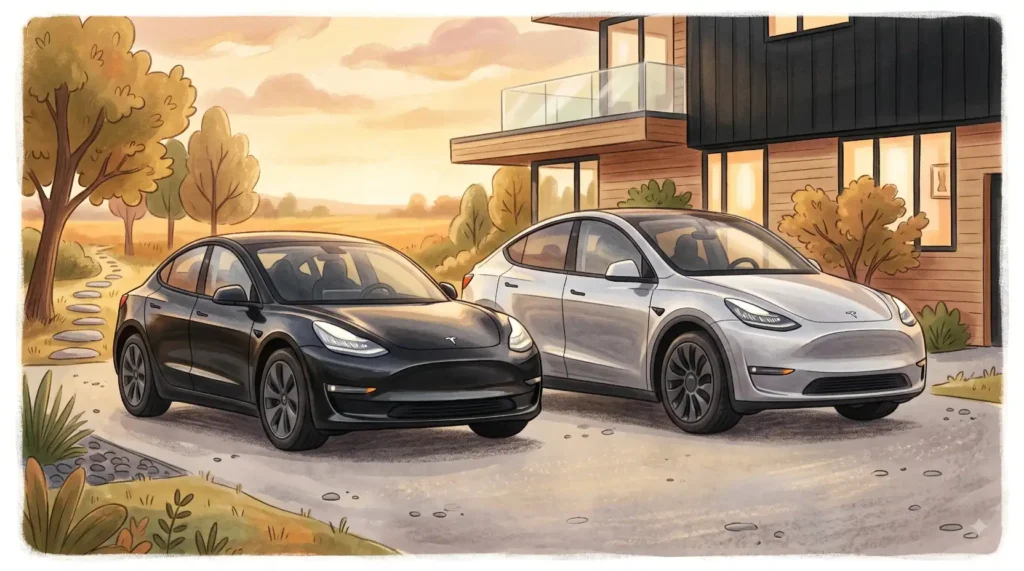
You’ve got a sensible budget, a dream of skipping the petrol pump forever, and a shortlist of exactly two cars. One is a chunky little micro-SUV that’s already a bestseller in its petrol form. The other is a tall, roomy hatchback from a French brand that’s quietly built a reputation for comfort. 🤔
And now you’re stuck — because on paper they overlap a lot. Both are affordable. Both promise easy city driving. Both have showroom salesmen who’ll tell you theirs is the obvious winner.
So let’s cut through the noise. This is our honest, head-to-head Tata Punch EV vs eC3 breakdown — built to help you choose with logic, not the sales pitch. 🇮🇳⚡
- ⚡ The Short Answer
- 📊 Tata Punch EV vs eC3 — Head to Head
- 🧭 Positioning: Micro-SUV vs Tall Hatchback
- 🔋 Range & Battery: How Far Will Each One Really Go?
- 🧳 Space & Practicality: Living With Each Car
- 📱 Features & Tech: Screens, Smart Stuff and Polish
- ⚡ Charging Speed & Real-World Charging
- 🚘 Ride & Build Quality: The Bit Test Drives Reveal
- 🛠️ Service Network, Spares & Ownership Cost
- 💰 Price & Value Verdict
- 📈 2026: budget EV competition in India
- ✅ 5 Tips to Choose Between Them
- 🛒 Shop This Post
- 🎯 Quick Quiz
- 📋 Pre-Purchase Checklist
- 🤔 People Also Ask
- 🚀 The Bottom Line
⚡ The Short Answer
If you want a stylish, feature-rich micro-SUV with India’s deepest service reach, the Punch EV is the safer, more polished pick for most buyers.
- 🥇 Tata Punch EV — chunky SUV styling, more features, bigger screen, ADAS on top trims, huge dealer network. The all-rounder.
- 🥈 Citroen eC3 — tall, airy, genuinely spacious cabin, comfy ride, simpler kit, often a sharper entry price. The value comfort-king.
- 📏 The eC3 surprises with its boot and cabin space; the Punch EV feels more premium inside.
- 🔋 Both deliver enough real-world range for daily city duty; the Punch EV’s larger battery option goes a touch further.
- 💸 The eC3 frequently undercuts on price, while the Punch EV asks a little more for its tech and finish.
- 🛠️ Tata’s service network is far wider, especially in smaller towns.
Bottom line: feature-and-polish buyer → Punch EV; space-and-value buyer → eC3. 👇
📊 Tata Punch EV vs eC3 — Head to Head
| Factor | Tata Punch EV | Citroen eC3 |
|---|---|---|
| 🚗 Body type | Micro-SUV (sub-4m) | Tall hatchback |
| 🔋 Battery (approx.) | ~25–35 kWh variants | ~29 kWh |
| 🛣️ Real-world range* | ~220–315 km city | ~200–260 km city |
| 🧳 Boot / space | Practical, decent boot | Surprisingly roomy cabin + boot |
| 📱 Features / screen | Big touchscreen, ADAS on top trims | Simpler, clean infotainment |
| ⚡ Fast charging (DC) | ~10–80% in ~50–60 min | ~10–80% in ~55–60 min |
| 💰 On-road price band (₹)* | ~₹11–16 lakh | ~₹12–14 lakh |
| 🛠️ Service reach | Very wide (incl. small towns) | Growing, more metro-focused |
*Range and price figures are illustrative and vary by variant, city, state subsidy, driving style and the year. Always confirm current numbers at the dealership. 🙏
🧭 Positioning: Micro-SUV vs Tall Hatchback
Let’s start with what these two actually are, because the body style shapes everything else. 📦
The Tata Punch EV is a sub-4-metre micro-SUV. It wears that high-riding, chunky-bumper SUV look that Indian buyers adore, sits you up a little taller in traffic, and feels rugged for its size. It’s the trendy, aspirational shape in the budget segment right now. 💪
The Citroen eC3 takes the tall-hatchback route. It’s less butch-looking but cleverly packaged — a boxy, upright silhouette that prioritises interior space and a comfortable ride over road presence. Think practical-first, not pose-first. 🧳
So in the Tata Punch EV vs eC3 debate, the first honest question is about identity. Do you want the SUV vibe and the premium-ish feel that comes with it? Or do you care more about raw space and a cushy ride for the rupees?
Neither approach is wrong here. The Punch EV sells the feeling of an SUV at a budget price. The eC3 sells usable room and comfort without the fuss. Knowing which one you’re actually buying for matters more than any spec line. 👨👩👧
🔋 Range & Battery: How Far Will Each One Really Go?
This is the question every budget-EV buyer obsesses over, and rightly so. 😅
The Punch EV is offered in more than one battery size, which lets Tata hit different price points and stretch the range ceiling on the bigger pack. The eC3 keeps things simpler with a single, modest battery aimed squarely at city use.
On paper, the Punch EV’s larger-battery variant pulls ahead on claimed range, while the eC3 sits a notch lower — though it’s tuned to be efficient. But here’s the honest caveat: official ARAI/claimed figures are best treated as marketing optimism. ⚠️
Your real-world range depends heavily on AC use (and in Indian summers that AC is non-negotiable 🥵), how heavy your right foot is, city-versus-highway driving, and how full you charge. Expect real city range to land roughly 20–30% below the sticker claim for both cars.
For a typical city commuter covering 30–50 km a day, both the Punch EV and eC3 comfortably give you several days of driving between charges. Daily range anxiety is largely a non-issue with either. 🔌
Where the Punch EV’s bigger battery option earns its keep is on the occasional longer run — that extra buffer is reassuring between fast chargers. The eC3, with its smaller pack, is best thought of as a brilliant city and short-intercity car rather than a highway tourer. Be honest about how far you actually drive. 🏞️
If you’re casting a wider net than just these two, it’s worth reading our Best Affordable Electric Cars in India Right Now guide — it puts both of these in context against the rest of the budget field.
🧳 Space & Practicality: Living With Each Car
Photos lie. What matters is how each car feels with real people and real bags inside. 🧳
Front seats — Both are comfy up front with a light, airy feel. The eC3’s tall, boxy shape gives a genuinely roomy, sit-up-and-see-everything driving position that taller folks love. The Punch EV’s SUV-ish seating is commanding too.
Rear seats — Here the eC3 quietly flexes. Its clever packaging delivers surprisingly generous knee and head room for the segment, making it a comfortable three-up bench for short hops. The Punch EV’s rear is perfectly usable for two adults and a kid, but it’s the tighter of the two for three grown-ups. 👥
Boot space — The eC3 again surprises with a roomy, practical boot that swallows a weekly shop or a weekend’s luggage easily. The Punch EV’s boot is decent and well-shaped for daily life, but the eC3 edges it on outright volume. 🛒
Parking and maneuvering — Both are small, light and easy to thread through chaotic traffic and into cramped parking. The Punch EV’s tidy micro-SUV footprint and the eC3’s compact hatch body are both genuine city blessings. Neither will stress you out in a tight basement. 🅿️
So the space verdict tilts towards the eC3 on sheer roominess, while the Punch EV counters with a more upmarket-feeling cabin. Classic budget trade-off. ⚖️
📱 Features & Tech: Screens, Smart Stuff and Polish
Indian buyers love a loaded cabin, and this is where the two diverge most clearly. ✨
The Tata Punch EV leans into the feature-rich angle. Expect a large, crisp touchscreen, a digital driver display, connected-car tech, automatic climate control on higher trims, and even ADAS-style assists on the range-toppers. For a budget EV, the kit-per-rupee is genuinely impressive. 💪
The Citroen eC3 takes a deliberately simpler, no-nonsense path. You get a clean infotainment setup (often with wireless smartphone connectivity), the essentials done well, and fewer fiddly menus. It’s less of a tech showcase and more about doing the basics reliably — which some buyers genuinely prefer. 🎯
A few practical pointers when comparing tech:
- 🎵 Check infotainment responsiveness in person — a big screen means nothing if it lags.
- ❄️ Automatic climate / fast cooling is a real comfort win in Indian heat; confirm which trims offer it.
- 🛡️ If you want ADAS or driver assists, the Punch EV’s top trims are where to look; the eC3 keeps it simpler.
- 🔌 Look at the connected-car app — remote charge monitoring and AC pre-cooling are lovely to have.
Honestly, both cabins suit their price. The Punch EV feels the more modern and feature-stacked; the eC3 feels honest and uncluttered. Sit in both, poke every button, and trust your gut. 🤚
⚡ Charging Speed & Real-World Charging
Charging is where budget-EV ownership either delights or frustrates, so let’s be practical. 🔌
Home charging — This is how 90% of your charging will actually happen, and both cars are happy on a home wallbox. Plug in overnight, wake up topped up. For most owners, public charging is the occasional exception, not the rule. 🏠
If you’re setting up home charging, a proper wallbox tops up either car comfortably overnight. (A good home charger is the single best EV accessory you can buy — see the Shop This Post block below. 👇)
DC fast charging — Both the Punch EV and eC3 support DC fast charging that’ll take you from roughly 10% to 80% in around 50–60 minutes, depending on the charger’s output, the variant, and battery temperature. ⏱️
Real-world caveats that matter for both:
- 🌡️ Charging slows in extreme heat or when the battery is very full — that last 20% always crawls.
- 🔌 Actual speed is capped by the charger you find, not just the car. A 25 kW DC unit is slower than a 50 kW one regardless of which car you drive.
- 📍 Charger availability on your routes matters far more than a couple of minutes of spec-sheet difference. Map your real trips first.
In the charging contest between these two, there’s no dramatic winner — both are perfectly liveable for city-first owners. The Punch EV’s larger-battery variant takes marginally longer to fill but rewards you with more range per session. For most buyers it’s a wash. ⚖️
🚘 Ride & Build Quality: The Bit Test Drives Reveal
Spec sheets can’t capture this, which is exactly why a real test drive is non-negotiable. 🛤️
The Tata Punch EV drives like a peppy, eager little SUV. Instant electric torque makes nipping through traffic genuinely fun, the high seating feels reassuring, and Tata’s cars generally carry a solid, planted, well-built feel. Its body structure has a reputation for feeling robust. 😎
The Citroen eC3 plays a different tune: it’s all about ride comfort. Citroen’s suspension tuning is famously soft and absorbent, so the eC3 glides over India’s broken roads and speed breakers with a cushiness that’s rare at this price. It’s less zippy, more relaxed and forgiving. 🎛️
Neither is a sports car, and both prioritise easy, comfortable everyday use — which is exactly right for their buyers. The choice comes down to character:
- ⚡ Want a peppy, solid-feeling, SUV-style city car? → Punch EV
- 🛋️ Want the cushiest, most pothole-soaking ride for the money? → eC3
Drive both back to back if you possibly can. The difference in feel is obvious within five minutes, and it’ll probably make the decision for you. 🔑
🛠️ Service Network, Spares & Ownership Cost
Here’s the unglamorous stuff that quietly decides how happy you’ll be three years in. 🧰
Service reach — Tata’s biggest advantage in the Tata Punch EV vs eC3 fight is its enormous, deeply-rooted service network. Tata dealerships and service centres exist in places Citroen simply hasn’t reached yet, including many smaller towns and tier-2/tier-3 cities. If you don’t live in a metro, this is a serious, practical point in the Punch EV’s favour. 🏙️
Citroen is a newer, smaller player in India, and its network — while expanding — is more concentrated in larger cities. If you’re metro-based, this is unlikely to bother you. If you’re not, ask hard questions about your nearest service centre and parts turnaround before you buy. 📍
Spares & repair — Being the higher-volume brand here, Tata generally enjoys easier parts availability and more technicians who’ve actually worked on EVs. The eC3 is well-supported in big cities but can mean longer waits for certain parts outside major hubs.
Battery warranty — Both cars come with long battery warranties (typically around 8 years / a high km cap), which is reassuring. Always read the exact terms — coverage details and degradation clauses vary, and they matter for resale. 📜
Running costs — Both are dirt-cheap to run versus petrol: low “fuel” cost on home electricity, fewer moving parts, minimal routine maintenance. Insurance and tyres become your bigger recurring costs. A basic OBD/battery health check tool is a smart buy for tracking battery state over time. 🔋
For a broader look at how Tata’s value stacks up against rivals, our Tata Nexon EV vs MG ZS EV: Full Comparison is a useful companion read if you’re tempted to stretch your budget upward. 🕵️
💰 Price & Value Verdict
Money talks, so let’s be blunt. 💸
The Citroen eC3 typically positions itself as the keen value play — often opening at a sharp on-road price and giving you a lot of cabin and boot space for the money. If your priority is the most usable car for the least cash, it makes a compelling case. 🎯
The Tata Punch EV usually asks a little more, and you’re broadly paying for the SUV styling, the extra tech and features, and the bigger-battery option. It’s not overpriced for what it is — it’s a more rounded, more polished package. And remember to factor in Tata’s far wider service reach when you weigh value.
So how do you frame value?
- 🥇 Most space and comfort per rupee → eC3
- 🥈 Best features, tech and SUV appeal → Punch EV
- 🏙️ Best for small-town ownership peace of mind → Punch EV
- 💵 Lowest likely entry price → eC3
There’s no universal winner in the Tata Punch EV vs eC3 price battle. There’s only the right winner for your needs and your budget. Be honest about which buyer you are. 🤝
📈 2026: budget EV competition in India
The Indian budget-EV landscape moves fast, so here’s where things stand as you read this in 2026. 🗓️
- 🔌 Charging infrastructure keeps expanding rapidly in cities and along key routes, which steadily shrinks range anxiety for both cars — making the smaller eC3 battery less of a worry than it once was for city owners.
- 💵 Prices and subsidies keep shifting as state EV policies update. The gap between the two can widen or narrow depending on local incentives, so always check current on-road numbers in your city. 📍
- 🆕 New budget rivals keep arriving in the affordable-EV space, pressuring both models and often improving their value through better deals and more features.
- 🔋 Battery tech and software updates mean newer variants of both cars generally do better on efficiency and charging than earlier ones. Buying the latest model year matters more in EVs than in petrol cars.
- 🛡️ Feature creep is real — assists and conveniences that were once premium-only are increasingly appearing on accessible trims, and the Punch EV has ridden that wave well.
The headline takeaway: don’t rely on a year-old review’s exact figures. Use this comparison for the framework, then verify today’s specs and prices at the showroom. 🤓
✅ 5 Tips to Choose Between Them
Quick, practical decision-helpers before you sign anything. 📝
- Be honest about your driving range. 🗺️ Almost all city → eC3 is plenty. Regular longer runs → the Punch EV’s bigger battery earns its keep.
- Sit in the back of both. 🧳 The eC3’s space genuinely surprises; if rear room matters, feel it yourself before deciding.
- Check your nearest service centre. 🛠️ Outside metros especially, confirm where you’ll actually service the car — and parts turnaround — before buying.
- Test drive both back to back. 🚗 Five minutes reveals the peppy-SUV vs cushy-comfort character difference instantly.
- Compare on-road, not ex-showroom. 💰 Insurance, taxes and local subsidies change the real gap. Get full on-road quotes for both.
🛒 Shop This Post
Whichever budget EV you pick, a few smart buys make ownership smoother. 🛍️
- Smart Home EV Wallbox Charger — The single best upgrade for any EV owner. Overnight full charges, app scheduling, and freedom from public chargers. Works beautifully with both the Punch EV and eC3. 🔌
- EV Accessories Kit (floor mats, charging cable organiser, portable tyre inflator) — The little things that keep a new EV tidy, protected and road-trip ready. 🧰
- OBD / EV Battery Health Checker — Plug-in tool to monitor battery state, range trends and degradation over time. Especially smart if you plan to keep the car long-term or buy used. 🔋
Disclosure: This post contains affiliate links. If you buy through them, we may earn a small commission at no extra cost to you. It helps keep EVs Mirror running — thank you! 🙏
🎯 Quick Quiz
Answer these and your winner becomes obvious. 🧠
- Is rear-seat and boot space your top priority? → Yes = eC3 leans ahead.
- Do you want the most features and SUV styling? → Yes = Punch EV pulls ahead.
- Do you live outside a major metro? → Yes = Punch EV (service reach).
- Is the cushiest possible ride a big deal for you? → Yes = eC3.
- Do you occasionally drive longer intercity trips? → Yes = Punch EV (range buffer).
Mostly Punch answers? You know your car. Mostly eC3? Likewise. Split? Let the test drive break the tie. 🏁
📋 Pre-Purchase Checklist
Tick these before you commit to either car. ✔️
- ⬜ Got full on-road price quotes for both (incl. insurance + local subsidy)
- ⬜ Confirmed nearest service centre location, capability and parts turnaround
- ⬜ Test drove both back to back on city + a rougher road
- ⬜ Checked boot and rear space with your actual luggage/family
- ⬜ Verified home charging feasibility (parking + power point)
- ⬜ Read the battery warranty terms in full
- ⬜ Confirmed the variant has the features you actually want (ADAS, climate, connected app)
- ⬜ Compared real-world range expectations, not just claimed figures
🤔 People Also Ask
Which is better in the Tata Punch EV vs eC3 comparison for a small family? 👨👩👧
For a family that values rear space and a comfy ride on a tight budget, the eC3’s roomy cabin and cushioned suspension make a strong case. If you want more features, SUV styling and wider service support, the Punch EV is the more rounded family pick.
Is the Tata Punch EV worth the extra money over the eC3? 💰
It depends on what you value. The Punch EV typically costs a bit more but adds SUV styling, more tech, a bigger-battery option and Tata’s far wider service network. If those matter to your daily life, yes. If pure space-for-money is your goal, the eC3 makes a sharper financial case.
Which has better real-world range, the Punch EV or eC3? 🔋
Broadly, the Punch EV’s larger-battery variant edges ahead on outright range, which helps on longer runs. For everyday city driving both give you multiple days between charges, so the gap matters less than it looks on paper.
How long does each car take to fast charge? ⚡
Both support DC fast charging that takes roughly 10% to 80% in about 50–60 minutes, depending heavily on the charger’s output and battery temperature. Real-world speed is often limited by the charger you find, not the car itself.
Which is cheaper to maintain and service? 🛠️
Both are very cheap to run versus petrol cars. The Punch EV usually has the edge on service convenience thanks to Tata’s wider network and easier parts availability, particularly outside big cities.
Is the Citroen eC3 a good first electric car? 🚗
Yes, for a city-focused first-time buyer it’s a comfortable, spacious and affordable entry into EVs. Just be realistic about its modest battery for long trips, and check that a Citroen service centre is reasonably close to you before buying.
🚀 The Bottom Line
If we strip away the noise, the Tata Punch EV vs eC3 decision is refreshingly clear once you know yourself. 🎯
Choose the Tata Punch EV if you want SUV styling, more features and tech, a bigger-battery option, and the reassurance of India’s widest service network — the safer, more polished pick for most budget EV buyers and small-town owners.
Choose the Citroen eC3 if you want maximum space, the cushiest ride for the money, and a keen entry price — and you mostly drive in and around the city. 🎣️
Both are genuinely likeable budget electric cars. There’s no wrong answer here — only the answer that fits your space needs, your drives, and your budget. 🇮🇳
👉 Still torn? Read our Best Affordable Electric Cars in India Right Now guide for the wider field, or the Tata Nexon EV vs MG ZS EV: Full Comparison if you’re tempted to stretch your budget a notch higher. Then go book those two test drives — your winner is waiting. 🚗⚡