So you want an electric car, but the thought of dropping ₹15–20 lakh on a brand-new one makes your wallet wince. Totally fair. Here’s the good news: the Indian used EV market in 2026 is genuinely exciting, and there are real options that won’t empty your savings.
A few years ago, “second-hand electric car” basically meant praying nobody had thrashed the battery. Today, with more EVs on the road since 2020 and better diagnostic tools, you can shop smart. The trick is knowing which models hold up, which ones to approach with caution, and how to spot a tired battery before you sign anything.
This guide is your roadmap. We’ll walk through real archetypes, illustrative price bands, range expectations, and the India-specific gotchas nobody warns you about. By the end, you’ll know exactly how to hunt down the best used EV under 10 lakh India has quietly started offering.
⚡ The Short Answer
In a hurry? Here’s the quick version:
- ₹10 lakh used in 2026 can land you a well-kept Tata Nexon EV (early variant), a Tigor EV, an older MG ZS EV, or a fleet-origin sedan — depending on year, condition, and city.
- Battery health matters more than mileage. A car with low odometer reading but a degraded pack is a worse buy than a higher-km car that was charged gently.
- Tata dominates the affordable used EV space simply because it sold the most units — more supply means more choice and better pricing leverage.
- Fleet-origin EVs (ex-Ola, ex-rental, ex-corporate) can be bargains, but they’ve often seen heavy fast-charging and need extra scrutiny.
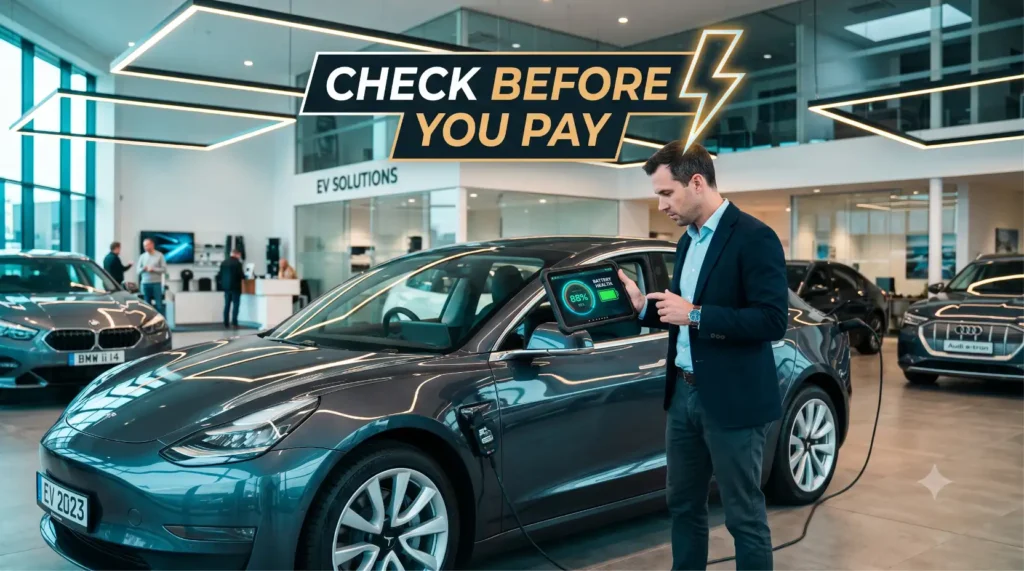
- Always verify battery state of health with an OBD2 scan or a certified inspection before paying. We’ll show you how. 🔋
- Price bands below are illustrative ranges, not live quotes — they shift by year, kilometres, city, and battery condition.
Comparison Table: 6 Used EV Picks Under ₹10 Lakh
| Model Archetype | Typical Real-World Range | Used Price Band (₹, illustrative) | Best For | Watch-Out |
|---|---|---|---|---|
| Popular all-rounder (Tata Nexon EV, early) | ~180–230 km | ₹7.5–9.5 lakh | Families wanting a do-it-all compact SUV | Early units have smaller packs; check battery SoH |
| Budget city EV (Tata Tigor EV) | ~150–190 km | ₹5.5–8 lakh | First-time EV buyers, city commutes | Tight boot, modest range for highways |
| Feature-rich SUV (MG ZS EV, older) | ~220–280 km | ₹8.5–10 lakh+ | Long commutes, tech lovers | Pricier spares, fewer service centres in small towns |
| Fleet-origin bargain (ex-commercial sedan) | ~140–180 km | ₹4.5–7 lakh | Budget hunters who’ll inspect hard | Heavy DC fast-charge history, cosmetic wear |
| Compact sedan (Tata Tigor EV, higher trim) | ~160–200 km | ₹6.5–8.5 lakh | Couples, app-cab graduates | Limited rear space, older infotainment |
| Value wildcard (older import / Mahindra eVerito) | ~100–140 km | ₹3.5–6 lakh | Tinkerers, ultra-low-budget buyers | Spares scarcity, dated battery chemistry |
Bands are illustrative and vary by year, condition, and location. Always confirm battery health before paying.
1. The Popular All-Rounder: Tata Nexon EV (Early Variant)
If there’s one car that defines the affordable used EV market in India, it’s the Tata Nexon EV. It sold in big numbers, which means there’s healthy supply on the used market — and supply is your friend when you’re negotiating.
Early Nexon EV units offered a real-world range in the rough neighbourhood of 180–230 km, depending on the variant and how gently it was driven. That’s plenty for daily city duty and the occasional weekend run.
Pros:
– Wide availability means better pricing leverage and more cars to compare.
– Compact SUV stance handles Indian roads and speed breakers well.
– Tata’s service network is broad, even in smaller cities.
Cons:
– The earliest units used a smaller battery pack — range drops noticeably on highways.
– Some early cars saw heavy fast-charging that may have accelerated degradation.
Battery note: Because Nexon EVs are so common, you’ll find varied histories. Two cars from the same year can have very different battery health. Insist on a state-of-health check — this is non-negotiable. Learn exactly how in our guide on how to check battery health on a used EV.
2. The Budget City EV: Tata Tigor EV
The Tigor EV is the unsung hero of budget electric motoring in India. It rarely makes flashy headlines, but for a city-bound commuter on a tight budget, it’s a sensible, no-drama choice.
Real-world range typically lands around 150–190 km — comfortable for daily commutes, school runs, and grocery hauls. On a long highway stretch, you’ll be planning charging stops, but in the city it just works.
Pros:
– Among the lowest entry prices in the used EV space.
– Sedan body gives a smoother ride than you’d expect.
– Simple, reliable Tata drivetrain with widespread parts support.
Cons:
– Boot space and rear legroom are modest.
– Highway range is limited — this is a city tool, not a tourer.
Battery note: Many Tigor EVs were bought by cautious, low-mileage owners — which can mean gentler battery wear. But “low odometer” doesn’t automatically mean “healthy pack.” A car parked at 100% charge in summer heat for years can degrade quietly. Verify, don’t assume.
3. The Feature-Rich SUV: MG ZS EV (Older Model)
Want more space, more range, and a bigger screen? The older MG ZS EV is the aspirational pick in the under-₹10-lakh hunt — though you’ll usually be looking at the top of that budget or a slightly higher-mileage example.
Real-world range on the older ZS EV sits around 220–280 km, which genuinely opens up inter-city travel. The cabin feels premium, and the feature list embarrasses cars costing more.
Pros:
– Longest range in this list — real highway capability.
– Spacious, well-equipped cabin with strong tech.
– Comfortable for four adults on a longer trip.
Cons:
– Spares and service can cost more, and centres are thinner in small towns.
– Top examples can nudge past ₹10 lakh — budget discipline required.
Battery note: MG’s larger pack means more cells to degrade, so a proper diagnostic scan matters even more here. The cost of a battery-related surprise is higher on a feature-rich SUV than on a budget hatch.
4. The Fleet-Origin Bargain: Ex-Commercial Sedan
Here’s where the real bargains hide — and where the real risk lives. Plenty of EVs entered service with ride-hailing fleets, corporate pools, and rental companies. When they’re retired and resold, prices can drop sharply.
A fleet-origin sedan might land in the ₹4.5–7 lakh band, well below private-owner pricing. That’s tempting. But these cars have usually been driven hard and fast-charged relentlessly — which is exactly the recipe for accelerated battery degradation.
Pros:
– Lowest prices in the segment by a comfortable margin.
– Often fleet-maintained with documented service records.
Cons:
– Heavy DC fast-charging history can mean a tired battery.
– Cosmetic and interior wear from high usage is common.
Battery note: Treat every fleet EV as guilty until proven innocent. A battery state-of-health scan isn’t optional here — it’s the entire deal. If the seller resists an inspection, walk away. No exceptions.
5. The Compact Sedan: Tata Tigor EV (Higher Trim)
The Tigor EV earns a second mention because the higher-trim variants make a slightly different case. With a few more creature comforts and a marginally better battery setup in later builds, the upper trims feel like a step up while staying within reach.
Real-world range hovers around 160–200 km. For couples, small families, or app-cab drivers graduating to private ownership, it’s a sweet spot of price and practicality.
Pros:
– Better equipment than the base trim for a small premium.
– Familiar, proven platform with easy servicing.
– Strong value retention compared with obscure models.
Cons:
– Rear-seat space is still tight for three adults.
– Infotainment feels dated against newer rivals.
Battery note: Later-build Tigor EVs may show gentler degradation patterns, but build year alone doesn’t guarantee health. Always pull the actual numbers. Our used EV buying guide walks through exactly what to inspect before you pay.
6. The Value Wildcard: Older Import / Mahindra eVerito
For the ultra-low-budget buyer or the hands-on tinkerer, there’s a wildcard tier — older imports and early Indian EVs like the Mahindra eVerito. These can dip into the ₹3.5–6 lakh range.
Expect modest real-world range, often 100–140 km, and dated battery chemistry. This is not a comfortable highway machine. But as a cheap, low-running-cost city runabout for someone who understands the trade-offs, it can make sense.
Pros:
– Rock-bottom entry pricing.
– Negligible running costs for short city trips.
Cons:
– Spares scarcity can turn a small fault into a long headache.
– Older chemistry means more degradation and shorter range.
Battery note: Here, battery health is make-or-break — and replacement packs may be hard or expensive to source. Only buy with a confirmed, recent state-of-health reading and your eyes wide open.
What ₹10 Lakh Buys You Used in 2026
Let’s set expectations honestly. Ten lakh rupees in the 2026 used market is a genuinely useful budget — but it’s not a magic wand.
At the top of the band (₹8.5–10 lakh), you’re looking at well-kept popular all-rounders, the best Nexon EV examples, or a higher-mileage feature-rich SUV. These are cars you can live with daily and trust on a weekend trip.
In the middle (₹6–8.5 lakh), the budget city EVs and compact sedans dominate. Solid, sensible, city-friendly machines with enough range for the vast majority of Indian driving patterns.
At the bottom (₹3.5–6 lakh), you enter fleet-origin and wildcard territory — bargains that demand serious inspection but can deliver remarkable value per rupee.
The single biggest variable across all three tiers? Battery condition. A ₹6 lakh car with a healthy pack can be a far better buy than an ₹8 lakh car with a tired one. Price tells you almost nothing until you know the battery’s state of health.
India-Specific Watch-Outs
Buying a used EV in India comes with a few wrinkles that don’t show up in Western buying guides. Keep these front of mind.
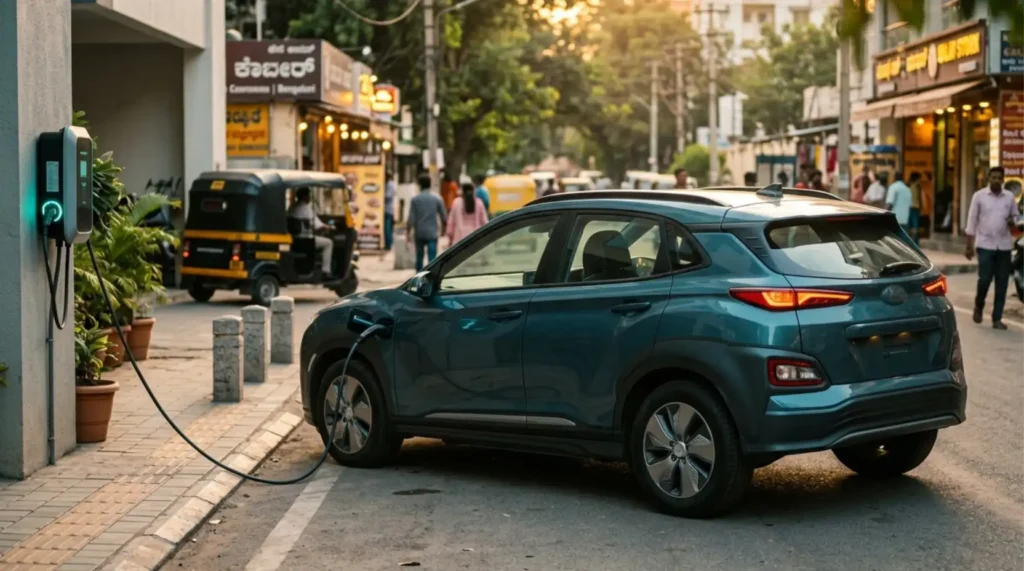
Charging access. Do you have a parking spot where you can install a home charger? In apartment complexes, society approval can be a real hurdle. Sort this out before you buy — a cheap EV is useless if you can’t charge it conveniently.
Battery warranty transfer. Many EVs came with long battery warranties, but transferability to a second owner varies by manufacturer and policy. Confirm in writing whether any remaining warranty carries over to you — it can be worth lakhs if something goes wrong.
Fleet history. Cars that served in ride-hailing or rental fleets have usually been fast-charged hard. Run the registration details, check the RC for commercial-to-private conversion, and inspect the battery especially carefully.
Service network reach. In metros, EV servicing is easy. In smaller towns, it can be thin — particularly for non-Tata brands. Factor in how far you’d have to travel for a major repair.
Documentation. Verify the RC, insurance, road tax status, and any charging-equipment paperwork. EVs sometimes come with a portable charger and a wall box — make sure both are included and working.
📈 Why India’s Used EV Market Is Heating Up
A few years back, buying a second-hand electric car felt like a gamble. In 2026, it’s becoming a smart, mainstream move — and here’s why momentum is building.
More supply. The EVs that flooded showrooms from 2020 onward are now hitting the used market in volume. More cars means more choice and more competitive pricing.
Better diagnostics. OBD2 scanners and battery-health tools have gotten cheaper and more capable, so buyers can finally peek under the hood — figuratively — before paying. The old “mystery battery” problem is shrinking.
Rising fuel costs. Every petrol price hike nudges more drivers toward electric. For city commuters doing high daily kilometres, the running-cost savings are hard to ignore.
Growing charging infrastructure. Public charging is expanding across metros and highways, easing the range anxiety that once scared used buyers off.
Certified used EV programs. Some dealers and platforms now offer inspected, certified pre-owned electric cars with limited assurances — lowering the risk for first-timers.
Put it together and you get a market that’s finally maturing. The best used EV under 10 lakh India offers today is genuinely more trustworthy than it was even two years ago. 🚗⚡
✅ 5 Tips for Buying Under ₹10 Lakh
- Lead with the battery. Before mileage, before colour, before features — get a state-of-health reading. It’s the heart of the car and the biggest cost risk.
- Compare multiple examples. Popular models like the Nexon EV have plenty of supply. Don’t fall for the first one; line up three or four and negotiate.
- Scrutinise fleet origins. A fleet bargain can be brilliant or a trap. Heavy fast-charging history demands a deeper inspection — no shortcuts.
- Confirm charging at home. Sort out your parking and society approval first. A great deal you can’t conveniently charge is no deal at all.
- Get warranty terms in writing. Verify whether any battery warranty transfers to you, and keep every document. It’s your safety net.
🛒 Shop This Post
A few tools make used EV shopping dramatically safer. These are the ones worth having:
- OBD2 Bluetooth Scanner — Plug it into the car’s diagnostic port and read battery and system data straight from your phone. The single most useful gadget for vetting a used EV’s health before you pay.
- Portable EV Home Charger (Level 1/2) — A reliable home charging unit means you control how gently the battery gets charged from day one. Gentle charging protects long-term battery health.
- EV Accessory & Inspection Kit — Tyre tread gauge, multimeter, torch, and basic tools to inspect a car properly on viewing day. Small spend, big confidence.
Disclosure: This post contains affiliate links. If you buy through them, evsmirror.com may earn a small commission at no extra cost to you. We only recommend gear we’d actually use. 🙏
🎯 Quick Quiz: Which Used EV Fits You?
Answer honestly:
- What’s your daily drive? Mostly city (under 60 km) → budget city EV or compact sedan. Mixed city + highway → popular all-rounder or feature-rich SUV.
- What’s your real budget after inspection costs? Under ₹6 lakh → fleet bargain or wildcard (inspect hard). ₹6–8.5 lakh → Tigor EV / city EV. ₹8.5–10 lakh → best Nexon EV or older ZS EV.
- How much risk can you stomach? Low → certified, private-owner Nexon EV. High (but you’ll inspect) → fleet-origin bargain.
If you answered “city, mid-budget, low-risk,” a well-kept Tata is probably calling your name. 📞
📋 Pre-Purchase Checklist
Print this. Take it to every viewing.
- [ ] Battery state-of-health verified via OBD2 scan or certified inspection
- [ ] Charging history discussed (how often DC fast-charged?)
- [ ] RC, insurance, and road tax verified and current
- [ ] Commercial vs private registration confirmed (watch for fleet conversions)
- [ ] Battery warranty transfer status confirmed in writing
- [ ] Both chargers (portable + wall box) included and tested
- [ ] Home/society charging access sorted before purchase
- [ ] Multiple examples compared for fair pricing
- [ ] Test drive completed — check range estimate at full charge
- [ ] Service records and accident history reviewed
🤔 People Also Ask
What is the best used EV under 10 lakh India buyers can realistically find in 2026?
For most buyers, a well-maintained early Tata Nexon EV hits the sweet spot — wide availability, decent real-world range, and a broad service network. The Tigor EV is the budget alternative, and an older MG ZS EV suits those wanting more space and range near the top of the budget.
Is it safe to buy a second-hand electric car in India?
Yes, increasingly so — provided you verify battery health first. Cheaper diagnostic tools and certified pre-owned programs have reduced the old risks. The key is treating the battery’s state of health as the deciding factor, not just odometer reading or looks.
How do I check the battery health on a used EV before buying?
Use an OBD2 scanner or get a certified inspection that reads the battery’s state of health and charge data. A low-mileage car can still have a degraded pack. Our how to check battery health on a used EV guide breaks down the exact steps.
Are fleet-origin or ex-cab EVs worth buying?
They can be excellent value because prices drop sharply, but they’ve usually been fast-charged heavily. Only buy one after a thorough battery health check and a careful look at cosmetic and mechanical wear. If the seller blocks an inspection, walk away.
Does the battery warranty transfer to the second owner?
It depends on the manufacturer and the original policy. Some warranties transfer, some don’t, and some have conditions. Always confirm in writing before you pay — a transferable battery warranty can be worth lakhs.
How much range should I expect from a used EV under 10 lakh?
Realistically, 150–280 km depending on the model and battery condition. Budget city EVs sit lower (150–190 km), while a healthy older MG ZS EV can stretch toward 280 km. Always treat the brochure figure as optimistic and verify real-world range on a test drive.
🚀 The Bottom Line
The under-₹10-lakh used EV market in India has quietly grown up. There’s real choice now — from the dependable Tata Nexon EV all-rounder, to the budget-friendly Tigor EV, to the feature-packed older MG ZS EV, to the genuine bargains hiding in fleet-origin stock.
But every recommendation here comes with the same asterisk: the battery is the car. A great price means nothing if the pack is tired. So inspect first, verify the state of health, and never let a fast-talking seller rush you past that step.
Do that, and ₹10 lakh genuinely buys you a clean, capable, low-running-cost electric car that’ll serve you for years. The best used EV under 10 lakh India has to offer is out there — you just have to shop smart to find it.
Ready to start? Read our full used EV buying guide: what to check before you pay, pack an OBD2 scanner, and go find your bargain. Your quiet, cheap-to-run electric future is closer than you think. ⚡🔋