Let me tell you about the number that ruins more EV road trips than any other. 🛣️
It’s the big, bold range figure printed on the window sticker. The one that says “516 miles” or “631 km” in confident, glossy marketing type. The number you fell in love with in the showroom.
Then you get on the interstate, set the cruise at 75 mph (120 km/h), crank the heat because it’s 28°F (-2°C) outside, and watch that “516 miles” quietly become 360. 😬
Here’s the thing nobody at the dealership wants to dwell on: the rated range and the real range are two different animals. One is measured in a gentle lab. The other is measured on your actual commute, in your actual weather, at your actual speed.
So this is the honest guide to the longest range EV real world performers of 2026 — the cars whose highway numbers hold up when the brochure stops talking. 👇
⚡ The Short Answer
Short on time? Here’s the gist before we get into the weeds.
- 🔋 Real-world highway range is typically 15–30% below the rated number — speed, cold, and HVAC are the culprits.
- 🏆 The true range champions pair a big usable battery with strong efficiency, not just raw kWh.
- 💨 Aero matters enormously — slippery sedans beat boxy SUVs at highway speed, even with smaller packs.
- ⚡ Fast-charging completes the picture — long range plus a quick 10–80% means you’re never stuck.
- 🇺🇸 US leaders: long-range Lucid Air, Tesla long-range models, the Hyundai Ioniq 6, and premium Mercedes EQ and BMW i sedans.
- 🇮🇳 India leaders: long-range Tata, MG, and BYD variants with bigger batteries and improving charging.
All range figures here are illustrative bands, not promises — real numbers shift by trim, model year, and how heavy your right foot is. 😉
🏆 The 2026 Longest Real-World Range Picks at a Glance
Before we explain why each thing matters, here’s a quick scan of the kind of EV archetypes that actually deliver distance when the road gets fast and cold. Think types of car, not exact trims. 👇
| EV Archetype | Rated Range | Est. Real-World Highway | Efficiency | Price Band (Illustrative) |
|---|---|---|---|---|
| 🇺🇸 Premium long-haul sedan (e.g. Lucid Air) | ~410–500+ mi / 660–805+ km | ~340–420 mi / 545–675 km | Excellent (very low kWh/mi) | $70,000–$110,000+ |
| 🇺🇸 Long-range mid sedan (e.g. Tesla LR) | ~330–360 mi / 530–580 km | ~270–300 mi / 435–480 km | Excellent | $45,000–$55,000 |
| 🇺🇸 Aero sedan (e.g. Hyundai Ioniq 6 LR) | ~320–360 mi / 515–580 km | ~265–300 mi / 425–480 km | Excellent | $43,000–$53,000 |
| 🇺🇸 Luxury flagship (e.g. Mercedes EQS / BMW i) | ~350–450 mi / 565–725 km | ~290–370 mi / 465–595 km | Very good | $85,000–$130,000+ |
| 🇮🇳 Long-range Indian SUV (e.g. Tata/MG) | ~310–425 mi / 500–685 km | ~230–320 mi / 370–515 km | Good–very good | ₹18–40 lakh |
| 🇮🇳 Premium Indian long-range (e.g. BYD) | ~300–400 mi / 480–645 km | ~240–320 mi / 385–515 km | Very good | ₹35–70 lakh |
See the gap between the middle two columns? That’s the whole story of this article. The cars that win the longest range EV real world crown are the ones where that gap stays small. 🔋
🔬 Rated vs Real-World Range: Why They Differ So Much
Let’s clear up the confusion first, because it’s the root of nearly every “my EV doesn’t go as far as promised” complaint.
Rated range comes from standardized tests — EPA in the US, WLTP in India and Europe. These tests run a fixed drive cycle on a dynamometer, in a controlled temperature, with no headwind, no hills, and no heater blasting. 🌡️
That’s useful for comparing cars on a level field. It is not a promise of what you’ll see on Tuesday’s commute.
The two big test standards even differ from each other. WLTP figures (common on Indian and European spec sheets) tend to run optimistically higher than EPA figures, so an Indian car quoting “500 km WLTP” and a US car quoting “300 miles EPA” aren’t speaking the same language. 🗣️
Here’s the mental model that actually helps: treat the rated number as a ceiling, not an average. Your real-world figure lives below it — usually 15–25% below in mild conditions, and up to 30%+ below on a fast, freezing highway run.
Once you internalize that, range anxiety basically disappears. You stop being surprised because you planned for reality, not for the brochure. 😎
🯊 What Actually Kills Real-World Range
Four villains quietly steal your miles every single day. Understanding them is how you predict — and protect — your range. 👇
1. Speed (the biggest one by far). 🏎️
Aerodynamic drag rises with the square of speed. Cruising at 75 mph (120 km/h) instead of 60 mph (96 km/h) can cost you 15–25% of your range. For a highway driver, nothing else comes close. Slow down 5 mph and you’ll genuinely add miles.
2. Cold weather. 🥶
Batteries hate the cold, and cabin heating draws a lot of power. A freezing morning can knock 20–30% off your range. Heat pumps and battery preconditioning soften the blow, but physics still wins.
3. Terrain and load. ⛰️
Long climbs, roof boxes, a full car of passengers and luggage — all of it adds energy demand. Regen recovers some of what you spend going downhill, but never all of it.
4. HVAC and accessories. ❄️
Blasting AC through an Indian summer or running the heater through a US winter both cost range. So do heated seats, defrosters, and a heavy infotainment load — though these are minor next to climate control.
The takeaway: the longest range EV real world champions aren’t immune to these forces. They just start from a bigger, more efficient base, so even after the haircut, plenty of usable range remains. ✂️
👑 The Genuine Real-World Range Champions (By Archetype)
Now the fun part — which kinds of EV actually deliver when the lab door closes. Let’s walk the archetypes. 🛣️
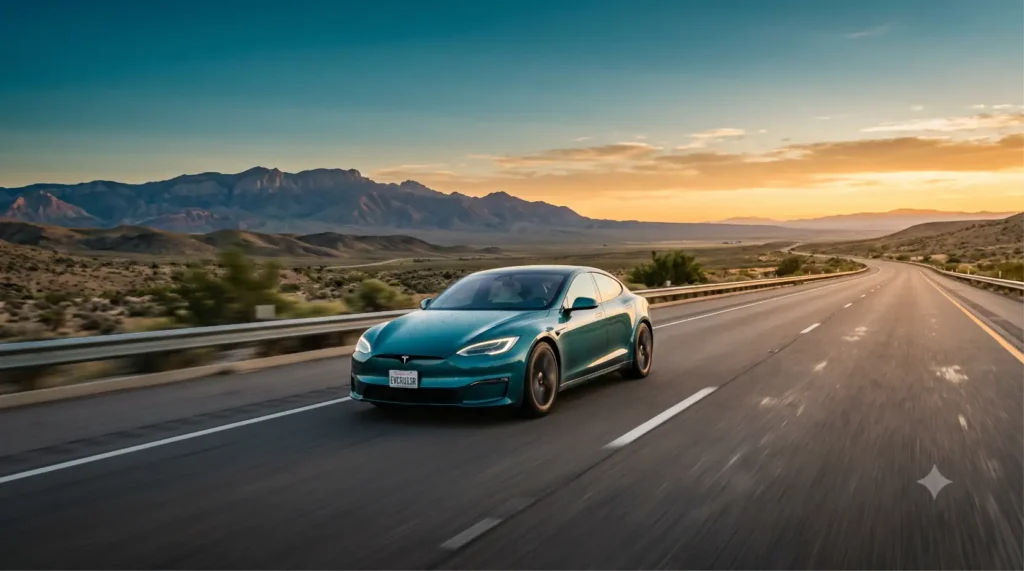
The premium long-haul sedan. This is the undisputed distance king. Cars like the long-range Lucid Air pair a huge, energy-dense battery with genuinely class-leading efficiency, so even after a real-world highway haircut they can hold onto 340–420 miles (545–675 km). For someone who drives genuinely far, that cushion means you simply stop thinking about charging on a normal day. 🥇
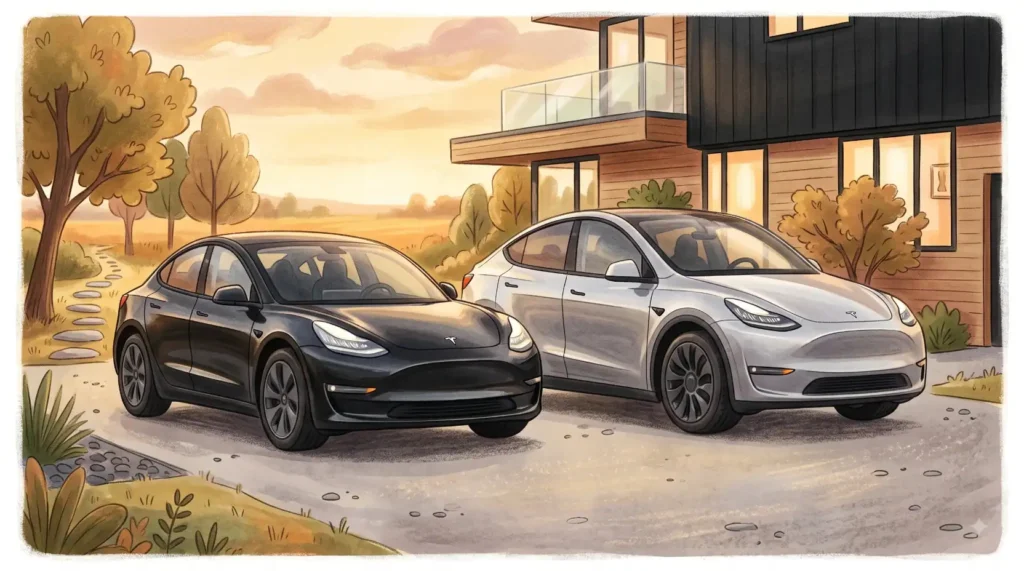
The efficient mid-size sedan. The long-range Tesla sedans and crossovers don’t have the biggest batteries, but they squeeze remarkable distance from every kWh and tap a mature charging network. Real-world highway numbers in the high-200s of miles (around 450–480 km) make them everyday distance workhorses.
The aero specialist. The Hyundai Ioniq 6 leans hard into its slippery teardrop shape, and it shows exactly where it counts — at highway speed, where most range disappears. Its drag advantage means the real-world gap stays unusually small. 💨
The luxury flagship. Mercedes EQ sedans and the BMW i flagships bring big batteries wrapped in serious refinement. They’re heavier and pricier, but their real-world highway range still lands comfortably in the 290–370 mile (465–595 km) band — distance with a velvet ride.
Notice the pattern? Three of these four are sedans. That’s not an accident, and the next section explains why. 👇
⚖️ Efficiency vs Raw Battery Size
Here’s the most misunderstood idea in EV shopping, so read it slowly.
Range = battery size × efficiency. You can get a long range two ways: a giant battery, or a stingy appetite for energy. The smartest cars do both, but efficiency is the cheaper, lighter, smarter path. ⚙️
A 100 kWh battery in a thirsty, brick-shaped SUV might deliver less real highway range than a 90 kWh battery in a sleek, efficient sedan. The sedan turns each kWh into more miles, so it travels farther on less stored energy.
Why does this matter beyond bragging rights?
- 🪙 Lower running cost — efficient cars cost less to charge for the same distance.
- 🔋 More usable range from the same pack — you go farther per charge.
- ⏱️ Less time charging — you’re not burning energy as fast, so you stop less often.
- 🏋️ Lighter, often nicer to drive — a smaller efficient battery means less dead weight.
So when someone asks me for the single most underrated spec in the hunt for the longest range EV real world crown, I never say “battery size.” I say miles per kWh (or km per kWh). Efficiency is the quiet superpower. 🏆
🐢 Why a Smaller, Efficient EV Can Beat a Big Inefficient One
Let’s make the last point concrete, because it flips a lot of assumptions.
Imagine two cars on the same freezing 80 mph (129 km/h) interstate run. 🛣️
Car A: a big, boxy luxury SUV with a 110 kWh battery but poor aero and a heavy curb weight. Rated for 330 miles (530 km). On this brutal run, it returns maybe 230 miles (370 km).
Car B: an aerodynamic sedan with a ‘smaller’ 84 kWh battery but excellent efficiency. Rated for 320 miles (515 km). On the same run, it returns around 250 miles (400 km).
The sedan has less battery on paper, yet it goes farther in the real world — and it charges faster (less energy to refill), costs less to run, and weighs less. 🤯
This is why the longest-range road-trip machines are so often low-slung sedans, not towering SUVs. Drag is the enemy at highway speed, and shape beats brute force.
It’s also why you shouldn’t shop on battery kWh alone. A spec sheet bragging about a huge pack tells you how much energy the car stores — not how far it’ll actually carry you. Two cars with identical batteries can differ by 50+ miles (80+ km) of real range purely on efficiency and aero. 💨
If your daily driving is the priority rather than cross-country hauls, our guide to the best EVs for long commutes — the range champions digs deeper into which of these archetypes fits a high-mileage routine.
🇮🇳 India’s Longest-Range Options
India’s EV story is younger but moving fast, and the real-world range conversation here has its own flavor. 🇮🇳
Two things shape it. First, spec sheets quote WLTP figures, which run optimistically high — so mentally trim them harder than you would an EPA number. Second, charging corridors are still filling in, so on-board range and value carry extra weight.
The value long-range SUV. Tata and MG have steadily pushed their bigger-battery variants up the range ladder. Their long-range trims quote impressive WLTP figures; in real highway use you’ll see a meaningful chunk less, but a comfortable 230–320 miles (370–515 km) real-world band is increasingly within reach for the price. 🔋
The BYD factor. BYD’s blade-battery models bring genuinely long range and respectable efficiency to the Indian market, often punching above their price in usable distance. For mixed traffic and longer highway runs, that real-world range holds up well.
The honest India rule of thumb. If your driving is mostly city and short highway hops, almost any long-range variant will spoil you. If you genuinely road-trip between cities, prioritize the bigger battery and a model with decent DC fast-charging — because the charging network, not the car, is usually the limiting factor. 🔌
For Indian buyers, the longest range EV real world champion is often whichever long-range variant you can charge reliably along your routes — range you can’t replenish is range you can’t fully use.
🎯 The Range That Actually Matters for Your Use
Here’s a liberating truth: most people chase far more range than they’ll ever need. 🧘
The “longest range” headline is exciting, but the right range is the one that matches your life with a sensible margin. Let’s break it down.
Daily commuter (under 60 mi / 100 km round trip). Almost any modern long-range EV is overkill in the best way. You’ll charge at home a couple of times a week and never think about range. Buy on efficiency and comfort, not maximum miles.
Mixed driver (60–150 mi / 100–240 km some days). Here a real-world 250–300 miles (400–480 km) gives you genuine breathing room — daily ease plus the occasional longer day without stress.
Genuine long-hauler (frequent 300+ mi / 480+ km days). Now the longest-range sedans earn their premium. A real-world 350+ mile (560+ km) cushion plus fast charging turns cross-country days into a coffee-stop rhythm rather than a charging chore. ☕
The trap is buying flagship range for a commuter’s life — you pay for miles you never use, in money and often in efficiency. Match the car to the real job. 🎯
⚡ Fast-Charging Completes the Picture
Long range gets you down the road. Fast charging gets you back on it. For real-world distance, you need both. 🔌
A counter-intuitive truth: a slightly shorter-range EV that charges fast can out-travel a longer-range one that charges slowly — because what limits a long day isn’t your first tank, it’s how quickly you refill for the second and third.
A few things worth understanding:
- 📈 The charging curve isn’t flat. EVs charge fastest from low states of charge (say 10–50%) and slow dramatically above 80%. So “10–80% in 20 minutes” is the spec to watch — not “0–100%.”
- 🔌 Peak kW is marketing; sustained kW is reality. A car that holds a high rate across the curve beats one that hits a flashy peak for thirty seconds.
- 🌡️ Preconditioning matters. Warming the battery before a fast charge — automatic on many EVs when you navigate to a charger — dramatically speeds things up, especially in the cold.
In the US, the leading long-range sedans add 200+ miles (320+ km) in roughly 20–30 minutes — basically a restroom-and-coffee break. In India, DC fast-charging is improving but varies by corridor, so pairing decent on-board speed with a home charger is the winning combo.
Planning a genuinely long day? Our walkthrough on how to plan an EV road trip covers charger spacing, buffer planning, and timing — read it before any big distance run. 🗺️
📈 2026: Real-World Range Keeps Improving
Here’s the encouraging backdrop to all of this — the goalposts keep moving in your favor. 🚀
A few trends shaping the 2026 landscape:
- 🔋 400+ mile (640+ km) real-world range is no longer exotic at the premium end, and mainstream cars keep creeping upward.
- 💨 Better aerodynamics and lighter materials are shrinking the gap between rated and real-world numbers every model year.
- 🔥 Heat pumps are going mainstream, slashing the cold-weather range penalty that used to scare off northern buyers.
- ⚡ Flatter, faster charging curves mean the difference between “long range” and “quick top-up” keeps narrowing.
- 🇮🇳 India’s long-range options are widening fast, with bigger-battery variants and improving corridors making genuine highway travel practical.
The takeaway? Whatever you buy in 2026 will likely beat what the same money bought two years ago — and the rated-versus-real gap is the thing closing fastest. 😎
✅ 5 Tips for Maximizing Real Range
Want to claw back the miles the highway steals? These habits genuinely move the needle. 👇
- 🐢 Ease off the speed. Dropping from 80 to 70 mph (129 to 113 km/h) can add real, meaningful range on a long run. Drag is your biggest enemy — starve it.
- 🔥 Precondition before fast-charging and before driving in the cold. Warming the cabin and battery while still plugged in uses grid power, not your range, and speeds up charging too.
- 🌡️ Use the heat pump and seat heaters smartly. Heating you (seats, wheel) costs far less range than heating the whole cabin to tropical levels.
- 🛸 Mind your tires and roof load. Correct pressure and ditching the empty roof box both quietly recover range you didn’t know you were losing.
- 📊 Live in the 20–80% band day to day. Charging to 100% only before genuinely long trips keeps the battery healthy and keeps you in the car’s most efficient range window.
Do these and your real-world range can land much closer to the rated figure than you’d expect. ⚡
🛒 Shop This Post
Three things that make long-range EV life genuinely easier. 🛍️
- 🔌 A Level 2 home EV charger (wallbox). The single highest-impact purchase for any long-range driver — wake up to a full battery every day and reserve fast-charging for actual road trips. Look for a 7–11 kW unit with scheduling.
- 📱 An EV route-planning tool/subscription. For genuine long hauls, a planner that predicts your real battery at each stop — accounting for speed, weather, and terrain — is worth every penny. It turns “will I make it?” into a non-question.
- 🧳 A road-trip EV gear kit. A portable tire inflator (correct pressure = more range), a tidy charging-cable organizer, and a compact emergency kit. Small stuff that makes long-distance days smooth.
💬 Disclosure: Some links in this post are affiliate links. If you buy through them, we may earn a small commission at no extra cost to you. We only recommend gear we’d genuinely use ourselves. Thanks for supporting the site! 🙏
🎯 Quick Quiz: How Much Real Range Do You Actually Need?
Answer honestly. 👇
1. What’s your longest regular drive?
– A) Under 60 mi / 100 km → Almost any long-range EV is overkill. Buy on efficiency.
– B) 60–150 mi / 100–240 km → A real-world 250–300 mi (400–480 km) car is your sweet spot.
– C) Over 250 mi / 400 km, often → You want a genuine longest-range champion plus fast charging.
2. Where do you drive most?
– A) City and suburbs → Real-world range stays high; you’ll rarely test it.
– B) Fast open highway → Expect the biggest real-world haircut. Prioritize aero and efficiency.
– C) Cold or mountainous regions → Budget for a 25–30% range penalty and get a heat pump.
3. Can you fast-charge along your routes?
– A) Yes, reliably → You can trade some range for efficiency and charging speed.
– B) Not really → Maximize on-board real-world range; it’s your only buffer.
Add it up and you’ll know exactly which archetype from the table fits you. 🎯
📋 The Real-World Range Checklist
Print this. Take it to the dealership. ✂️
- [ ] I checked the real-world highway range, not just the EPA/WLTP rated number
- [ ] I mentally trimmed 20–30% off the rated figure for fast/cold driving
- [ ] Efficiency (miles/km per kWh) is strong for the car’s class
- [ ] The car’s shape/aero suits the speeds I actually drive
- [ ] 10–80% fast-charge time is under ~30 minutes
- [ ] It has a heat pump (essential for cold climates)
- [ ] Real-world range comfortably covers my longest regular drive with margin
- [ ] Reliable fast-charging exists along my common routes
- [ ] I can install a Level 2 home charger
- [ ] Price band fits my budget in $ / ₹
Tick most of these and you’ve found a genuine real-world range champion. ✅
🤔 People Also Ask
Q: Which EV has the longest real-world range in 2026?
There’s no single winner, but the longest range EV real world crown generally goes to premium long-haul sedans like the Lucid Air, which can hold 340–420 miles (545–675 km) on the highway after the real-world haircut. Long-range Tesla and Hyundai Ioniq 6 lead the more affordable tier, while in India, long-range Tata, MG, and BYD variants are the distance picks. (Figures are illustrative.)
Q: How much less is real-world range than the rated range?
Typically 15–25% less in mild conditions and up to 30%+ less on a fast, cold highway run. A good rule for highway driving is to mentally shave 20–30% off the EPA or WLTP figure and plan around that number. WLTP ratings (common in India) run more optimistic, so trim them a touch harder.
Q: Why do EVs lose so much range on the highway?
Aerodynamic drag rises with the square of speed, so highway cruising at 75 mph (120 km/h) demands dramatically more energy than city driving. Add cold weather and HVAC use and the losses stack up. This is why slippery, efficient sedans hold their real-world range far better than boxy SUVs.
Q: Is a bigger battery always better for range?
No. Range equals battery size multiplied by efficiency, so a smaller, efficient, aerodynamic car can out-travel a bigger inefficient one in the real world — while charging faster and costing less to run. Look at miles per kWh and the car’s shape, not just the headline kWh figure.
Q: How much real-world range do I actually need?
Match it to your longest regular drive plus a margin. Most drivers are well served by a real-world 250–300 miles (400–480 km). Only frequent long-haulers truly benefit from the flagship 350+ mile (560+ km) champions — buying that much range for a short commute means paying for miles you’ll never use.
Q: Does fast-charging matter as much as range?
For long-distance driving, yes — they work together. Long range gets you down the road; fast 10–80% charging gets you back on it. A slightly shorter-range EV that charges quickly can out-travel a longer-range one that charges slowly, because refill speed is what limits a genuine all-day drive.
🚀 The Bottom Line
The longest-range EV isn’t the one with the biggest number on the window sticker — it’s the one that keeps the most of that number when you hit a fast, cold highway. 🛣️
Chase real-world range, not the brochure. Weigh efficiency, aerodynamics, and fast-charging alongside raw battery size, and the genuine champions get obvious fast — usually slippery, efficient sedans like the Lucid Air, long-range Tesla and Ioniq 6 in the US, or the best long-range Tata, MG, and BYD variants in India. The longest range EV real world winner is always the one that turns stored energy into the most usable miles on roads like yours. 🔋
Then match the range to your actual life. A commuter doesn’t need a cross-country flagship, and a road-tripper shouldn’t settle for less. Buy on the realistic number, set up home charging, and the range-anxiety era fades clean out of your rear-view mirror. 😎
➡️ Next steps: Driving far every day rather than cross-country? Read our best EVs for long commutes — the range champions guide. Planning a genuine long-distance trip? Start with how to plan an EV road trip before you go. Then pick your real-world range champion with total confidence. ⚡